


Réponse courte
Pour les bottes en caoutchouc, les bonnes chaussettes font toute la différence. Vous voulez des chaussettes qui évacuent l'humidité et qui s'ajustent bien pour éviter les pieds qui transpirent dans les bottes. La laine mérinos est un excellent choix car elle gère l'humidité comme une championne et reste confortable même humide. Cherchez des chaussettes qui montent au moins jusqu'en haut de votre botte, voire plus haut, pour éviter les frottements et garder les débris à l'extérieur. Commencez toujours avec des chaussettes propres et sèches, et pensez à avoir une paire de rechange si vous devez rester dehors longtemps.
Problèmes avec les bottes en caoutchouc
Les bottes en caoutchouc sont excellentes pour garder vos pieds au sec, mais elles peuvent aussi poser quelques problèmes si vous ne faites pas attention. Les mauvaises chaussettes peuvent transformer un avantage en un désagrément humide et inconfortable.
Transpiration piégée
Parce que les bottes en caoutchouc sont imperméables, elles ne laissent pas passer l'air. Cela signifie que la transpiration de vos pieds reste piégée à l'intérieur. Si vous portez le mauvais type de chaussettes, comme du coton, cette transpiration ne peut pas s'échapper. Elle stagne, rendant vos pieds humides et froids, ce que vous voulez éviter quand vous êtes exposé aux éléments. C'est une grande raison pour laquelle choisir les bonnes chaussettes pour bottes en caoutchouc est si important, surtout si vous cherchez les meilleures chaussettes pour bottes de boue ou pour bottes de pluie.
Ajustement lâche
Certaines bottes en caoutchouc, surtout les moins chères, peuvent sembler un peu lâches ou mal ajustées. C'est là que vos chaussettes entrent en jeu. Porter des chaussettes fines et fragiles ne remplira pas cet espace supplémentaire. Vous risquez de sentir votre pied glisser à l'intérieur de la botte, ce qui peut provoquer des ampoules et un inconfort général. Les meilleures chaussettes pour bottes en caoutchouc doivent avoir assez d'épaisseur et de structure pour aider à créer un ajustement plus serré, rendant vos bottes plus sûres et plus confortables. C'est particulièrement vrai si vous cherchez des chaussettes pour bottes de pluie ou pour toute situation où vous serez debout longtemps.
Choisir le matériau
Lorsque vous choisissez des chaussettes à porter avec des bottes en caoutchouc, le matériau est très important. Il ne s'agit pas seulement de confort ; il s'agit de garder vos pieds secs et au chaud, ce qui est crucial quand vous êtes coincé dans des bottes en caoutchouc. Ces bottes ne respirent pas, donc ce que vous mettez sur vos pieds doit faire tout le travail.
Laine Mérinos
La laine mérinos est un choix de premier ordre pour une raison. Elle évacue naturellement l'humidité, ce qui signifie qu'elle éloigne la transpiration de votre peau. C'est essentiel car les pieds mouillés perdent de la chaleur beaucoup plus vite que les pieds secs, et personne ne veut ça, surtout quand vous êtes dehors dans le froid ou que vous transpirez.
- Évacuation de l'humidité : Éloigne la transpiration de votre peau.
- Régulation de la température : Vous garde au chaud quand il fait froid et étonnamment frais quand il fait chaud.
- Résistance aux odeurs : Reste fraîche plus longtemps, même après une longue journée.
- Douceur : Contrairement à la laine traditionnelle, la mérinos est fine et ne gratte généralement pas.
Évitez le coton
Sérieusement, ne le faites pas. Le coton est comme une éponge qui retient l'humidité. Une fois mouillé, il reste humide et met une éternité à sécher. C'est exactement le contraire de ce que vous voulez quand vos pieds sont enfermés dans du caoutchouc.
Les chaussettes en coton peuvent sembler douces au début, mais elles retiennent l'humidité. Elles laisseront vos pieds humides et froids, peu importe la qualité de vos bottes en caoutchouc pour empêcher l'eau extérieure d'entrer. Privilégiez des matériaux capables d'évacuer la transpiration.
Réfléchissez : vous essayez de garder vos pieds au sec de l'extérieur avec des bottes en caoutchouc, mais vous devez aussi gérer la transpiration produite par vos pieds de l'intérieur. Le coton échoue dans les deux cas. Vous vous retrouverez avec des pieds mouillés et inconfortables, ce qui peut provoquer des ampoules et rendre l'expérience globalement désagréable.
Choisir la hauteur
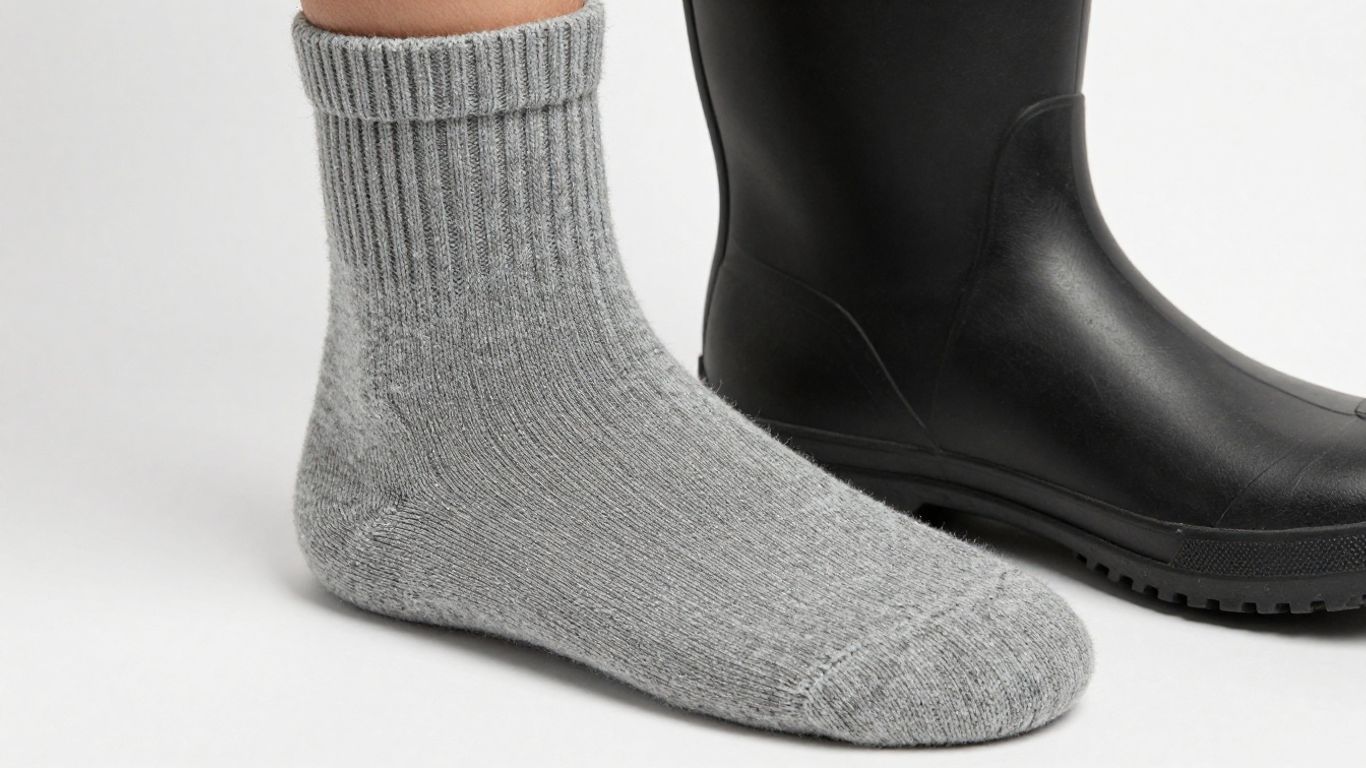
Lorsque vous choisissez des chaussettes pour vos bottes en caoutchouc, la hauteur est plus importante que vous ne le pensez. Vous ne voulez pas de chaussettes trop courtes, laissant votre peau exposée au frottement contre le bord de la botte, et vous ne voulez certainement pas qu'elles soient trop longues au point de se plisser de manière inconfortable. Trouver la bonne hauteur aide à prévenir les irritations et à garder les débris à l'extérieur.
Chaussettes pour bottes
Ce sont vos alliées pour la plupart des bottes en caoutchouc standard, généralement d'environ 20 cm de hauteur. Les chaussettes pour bottes mesurent habituellement environ 28 cm du talon au bord. Cette longueur leur permet de se positionner confortablement au-dessus du haut de votre botte, vous offrant une protection supplémentaire et évitant le contact désagréable entre la botte et la peau. Elles sont un excellent choix pour un usage général, que vous travailliez dans le jardin ou que vous fassiez une randonnée.
Chaussettes montantes
Les chaussettes montantes sont un peu plus polyvalentes. Elles mesurent généralement entre 15 et 20 cm du talon au bord, atteignant le milieu du mollet. Bien qu'elles n'offrent pas la même couverture complète qu'une chaussette spécialement conçue pour les bottes hautes, elles peuvent bien fonctionner avec des bottes de pluie plus courtes ou si vous préférez un peu moins de tissu. Assurez-vous simplement qu'elles ne rentrent pas dans la botte, sinon elles risquent de se plisser.
La hauteur idéale des chaussettes est celle qui dépasse d'au moins un ou deux centimètres le haut de votre botte en caoutchouc. Cela empêche le bord de la botte de frotter directement sur votre peau, ce qui peut provoquer des ampoules et des irritations, surtout lors de longues périodes de port ou lorsque vos pieds transpirent.
Voici un guide rapide des hauteurs de chaussettes courantes et leur correspondance avec les bottes en caoutchouc :
- Chaussettes invisibles : (Environ 3 pouces) Oubliez-les pour les bottes en caoutchouc. Elles disparaissent à l'intérieur et n'offrent aucune protection.
- Chaussettes chevilles : (Environ 5-6 pouces) Mieux que les invisibles, mais peuvent encore être trop courtes pour les bottes plus hautes, laissant le bas de la jambe exposé.
- Chaussettes quart : (Environ 6-7 pouces) Elles arrivent juste autour de la cheville. Elles conviennent pour des bottes très basses mais ne sont généralement pas idéales.
- Chaussettes montantes : (Environ 8 pouces) Une option décente, surtout pour les bottes en caoutchouc plus courtes. Elles doivent dépasser le haut de la plupart des bottes de travail standard.
- Chaussettes pour bottes / mi-mollet : (Environ 11 pouces) C'est souvent le meilleur choix. Elles dépassent de manière fiable le haut des bottes de travail typiques de 8 pouces.
- Chaussettes hautes / au-dessus du mollet : (17 pouces ou plus) Celles-ci sont pour vos bottes en caoutchouc les plus hautes, assurant une couverture complète de la jambe.
Amorti et ajustement
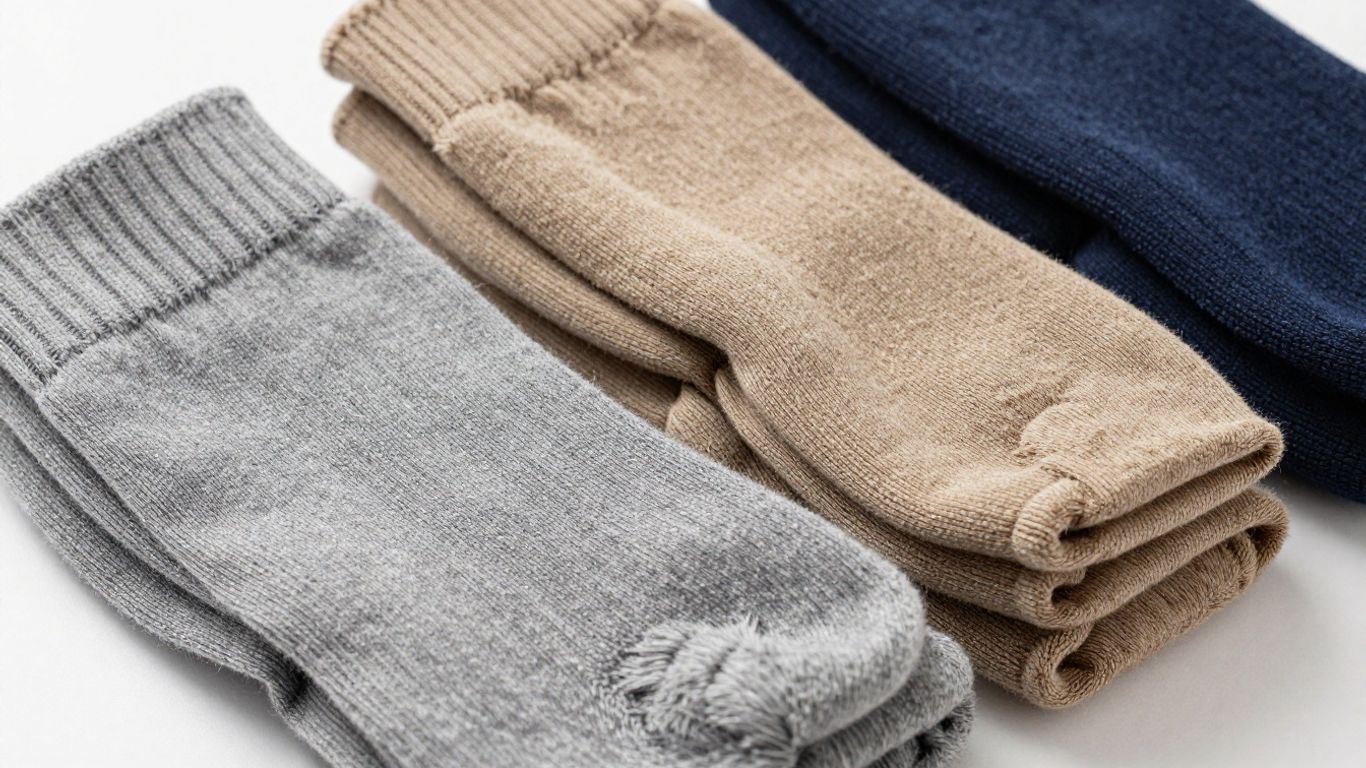
Lorsque vous enfilez vos pieds dans des bottes en caoutchouc, la bonne chaussette fait une énorme différence. Vous ne voulez rien de trop fin qui ressemble à du papier, ni quelque chose de trop épais qui donne l'impression que vos bottes vont éclater. L'objectif est un ajustement confortable et serré qui soutient votre pied sans créer de points de pression ni de plis.
Pensez à la façon dont la chaussette remplit l'espace à l'intérieur de votre botte. Une bonne chaussette doit offrir un peu de rembourrage, surtout aux endroits qui subissent des chocs, comme le talon et la plante du pied. Cet amorti absorbe les chocs et peut prévenir les ampoules, ce que vous voulez éviter lorsque vous êtes en déplacement.
Les meilleures chaussettes pour bottes en caoutchouc doivent donner l'impression d'être une extension naturelle de votre pied, pas un accessoire secondaire.
Voici ce qu'il faut rechercher :
- Pointure sans couture : Une couture au niveau des orteils peut être très irritante, surtout à l'intérieur d'une botte ajustée. Recherchez des chaussettes avec une construction "vraiment sans couture" où la couture est inexistante ou si plate que vous ne la sentez pas.
- Soutien de la voûte plantaire : Beaucoup de bonnes chaussettes incluent une bande de tricot plus serré autour de la voûte plantaire. Cela aide à maintenir la chaussette en place et peut réduire la fatigue du pied lors d'un port prolongé.
- Renfort du talon : Un renfort de talon bien défini signifie que la chaussette est conçue pour s'adapter correctement à votre talon, évitant ainsi les glissements et les plis.
- Épaisseur générale : Tenez compte de l'épaisseur en fonction de vos bottes et de la météo. Des chaussettes plus épaisses offrent plus de chaleur et d'amorti, mais peuvent rendre les bottes plus serrées. Des chaussettes plus fines peuvent être préférables par temps chaud ou si vos bottes sont déjà bien ajustées.
Bien ajuster les chaussettes signifie que vos pieds resteront plus heureux plus longtemps. Il s'agit de trouver ce juste milieu où la chaussette vous soutient sans être restrictive, et où la botte est bien ajustée sans être trop serrée. Cet équilibre est essentiel pour éviter l'inconfort et garantir que vos pieds restent au sec et sans ampoules.
Routine de séchage des chaussettes
Garder vos pieds au sec est l'objectif principal, n'est-ce pas ? Cela signifie non seulement choisir les bonnes chaussettes, mais aussi savoir comment en prendre soin. Après une longue journée en bottes en caoutchouc, surtout si vous avez été dans des conditions humides ou fait un travail humide, vos chaussettes sont probablement humides. Les laisser bien aérer est la clé pour éviter cette odeur désagréable et assurer leur durabilité.
Laissez toujours vos chaussettes sécher complètement entre les utilisations. C'est non négociable si vous voulez éviter l'accumulation de bactéries et les mauvaises odeurs. Pensez-y comme ceci : si vous mettez des chaussettes humides, vous commencez mal la journée, et vos bottes en caoutchouc vont simplement emprisonner cette humidité à nouveau.
Voici une routine simple :
- Après usage : Enlevez vos chaussettes dès que vous retirez vos bottes. Ne les laissez pas simplement en boule à l'intérieur des bottes.
- Rincez si nécessaire : Si elles sont vraiment sales ou boueuses, rincez-les rapidement à l'eau froide. Cela aide à éliminer le pire de la saleté avant le lavage.
- Lavez correctement : La plupart des chaussettes de bottes en laine mérinos et des chaussettes à évacuation d'humidité peuvent être lavées en machine. Retournez-les pour aider à éliminer les odeurs et protéger le tissu. Utilisez un cycle à l'eau froide et un détergent doux. Certains préfèrent le lavage à la main, ce qui est aussi très bien si vous préférez.
- Le séchage est crucial : La meilleure façon de les sécher est de les suspendre sur un étendoir. Laissez-les sécher complètement à l'air libre. Si vous êtes pressé, vous pouvez utiliser un sèche-linge à très basse température pendant un court moment, mais le séchage à l'air est généralement meilleur pour le matériau et la longévité des chaussettes.
Ne sous-estimez pas le pouvoir d'une bonne routine de séchage. C'est ce qui fait la différence entre des pieds confortables et un désordre humide.
N'oubliez pas que même les meilleures chaussettes montantes en laine mérinos pour bottes de pluie ne donneront pas de bons résultats si elles ne sont pas bien entretenues. Un peu d'effort pour les sécher fait toute la différence pour garder vos pieds heureux et vos chaussettes en bon état.
Une configuration pratique
D'accord, parlons de comment garder vos pieds heureux quand vous portez des bottes en caoutchouc. Ce n'est pas seulement une question de chaussettes, mais aussi de la façon dont vous les utilisez. Pensez-y comme ceci : même les meilleures chaussettes peuvent vous décevoir si vous ne les utilisez pas intelligemment.
D’abord, vous avez besoin d’un système. Cela signifie avoir plusieurs paires de vos chaussettes pour bottes préférées prêtes à l’emploi. Ne prenez pas la première paire venue. Gardez-les propres, sèches et facilement accessibles. Cela rend le changement beaucoup moins contraignant quand c’est nécessaire.
Voici une routine simple qui fonctionne :
- Matin : Enfilez une paire fraîche et sèche de vos meilleures chaussettes pour bottes. Assurez-vous qu’elles s’ajustent bien dans vos bottes en caoutchouc, sans faire de plis.
- Contrôle à midi : Si vous avez été actif, surtout par temps chaud ou en faisant quelque chose qui vous fait transpirer, prenez un moment pour vérifier vos chaussettes. Touchez-les pour détecter l’humidité.
- Le changement : Si vos chaussettes sont même un peu humides, il est temps de les changer. C’est l’étape la plus importante pour éviter les ampoules et l’inconfort. Gardez une paire de rechange dans votre sac ou votre voiture.
- Soir : Quand vous enlevez vos bottes, laissez vos chaussettes s’aérer. Si elles sont humides, suspendez-les pour qu’elles sèchent complètement avant de les mettre à la lessive. Ne les jetez pas en tas.
N’oubliez pas, les bottes en caoutchouc ne sont pas très respirantes. Elles retiennent l’humidité. Vos chaussettes sont la seule barrière entre votre peau et cet environnement humide. En prendre soin, c’est prendre soin de vos pieds.
Cela peut sembler beaucoup, mais honnêtement, cela devient une seconde nature. Vous apprendrez vite à reconnaître quand il est temps de changer de chaussettes quand elles sont mouillées, et vos pieds vous en remercieront. C’est un petit effort pour un grand confort et une meilleure santé des pieds.
Préparer votre équipement ne doit pas être compliqué. Nous avons simplifié les choses pour commencer avec les bons outils. Prêt à voir à quel point c’est facile ? Visitez notre site dès aujourd’hui pour en savoir plus et lancer votre installation !
Conclusion de votre recherche de chaussettes pour bottes
Alors, vous avez vu que choisir les bonnes chaussettes pour vos bottes en caoutchouc ne se résume pas seulement au confort, même si c’est une grande partie de l’affaire. Il s’agit de garder vos pieds au sec, au chaud quand il le faut, et protégés toute la journée. Que vous soyez sur un chantier, à la ferme, ou simplement sous la pluie, la bonne chaussette fait vraiment la différence. Pensez à ce que vous faites le plus souvent et au type de bottes que vous portez. La laine mérinos est un excellent choix dans la plupart des situations car elle gère bien l’humidité et reste chaude même si elle est humide. Pour les travaux vraiment durs ou les bottes à embout en acier, cherchez un rembourrage et une durabilité supplémentaires. N’oubliez pas non plus la hauteur de la chaussette – elle doit s’adapter à votre botte, pas lui nuire. Investir un peu plus dans une bonne paire de chaussettes vous rapportera des pieds plus heureux, croyez-moi.
Questions fréquemment posées
Pourquoi les chaussettes ordinaires sont-elles mauvaises pour les bottes en caoutchouc ?
Les chaussettes en coton absorbent la sueur comme une éponge. Quand vos pieds transpirent dans des bottes en caoutchouc, cette humidité reste piégée. Cela peut causer de l'inconfort, des ampoules, et même des mauvaises odeurs. Vous voudrez des chaussettes faites de matériaux qui évacuent l'humidité de votre peau.
Quel est le meilleur matériau pour les chaussettes à porter avec des bottes en caoutchouc ?
La laine mérinos est un excellent choix. Elle évacue très bien l'humidité, gardant vos pieds au sec. De plus, elle aide à réguler la température, donc vos pieds restent confortables qu'il fasse chaud ou froid. Elle ne dégage pas non plus facilement d'odeurs, ce qui est un gros avantage !
Dois-je éviter complètement les chaussettes en coton ?
Oui, il vaut mieux éviter les chaussettes en coton avec des bottes en caoutchouc. Le coton retient l'humidité, ce qui rend vos pieds humides et froids. C'est le contraire de ce que vous voulez pour des pieds confortables, surtout si vous êtes actif ou portez des bottes toute la journée.
Quelle hauteur de chaussette est la meilleure pour les bottes en caoutchouc ?
Vous voudrez des chaussettes assez hautes pour empêcher le haut de la botte de frotter contre votre peau. Les « chaussettes de botte » d'environ 28 cm ou les chaussettes « au-dessus du mollet » d'environ 43 cm couvrent généralement bien cet espace.
Ai-je besoin de chaussettes spéciales pour les bottes de travail ?
Bien que vous puissiez porter des chaussettes de randonnée avec des bottes de travail, les chaussettes spécialement conçues pour le travail ont souvent un rembourrage supplémentaire aux endroits clés comme le talon et les orteils. Cela offre plus de confort et de protection, surtout si vous êtes debout longtemps ou si vous portez des bottes à embout en acier.
Comment garder mes pieds au sec dans des bottes en caoutchouc ?
L'essentiel est de porter des chaussettes qui évacuent l'humidité, comme celles en laine mérinos ou en matériaux synthétiques. Assurez-vous aussi que vos bottes soient sèches avant de les enfiler, et pensez à changer de chaussettes si elles deviennent humides pendant la journée.
Les chaussettes en laine sont-elles irritantes ?
Toutes les chaussettes en laine ne sont pas irritantes ! La laine mérinos, en particulier, est connue pour être douce et non irritante. C'est un bien meilleur choix pour le confort comparé aux anciens types de laine qui pouvaient être rugueux.
Qu'est-ce qui fait qu'une chaussette s'adapte bien à une botte ?
Un bon ajustement signifie que la chaussette reste en place sans se plisser ni glisser vers le bas. Vous voulez aussi qu'elle soit assez ajustée pour empêcher tout mouvement excessif à l'intérieur de la botte, mais pas trop serrée pour ne pas couper la circulation. Les chaussettes avec un soutien de la voûte plantaire peuvent aussi aider à améliorer le confort de vos pieds.