


Le paysagisme, c’est dur
Soyons honnêtes, un travail de paysagiste n’est pas une promenade de santé. Vous êtes confronté à toutes sortes de conditions, et vos pieds en prennent un coup. Comprendre cette routine quotidienne vous aide à choisir le bon équipement, et cela commence par vos chaussettes. Ce ne sont pas n’importe quelles chaussettes ; nous parlons de [chaussettes de travail spécialisées pour bottes de paysagiste] capables de supporter la pression.
Matins humides
Les matins signifient souvent marcher dans l’herbe couverte de rosée ou faire face à des arroseurs inattendus. Les chaussettes en coton absorbent cette humidité comme une éponge, laissant vos pieds lourds et froids. Cette humidité est un chemin rapide vers l’inconfort et peut même provoquer des ampoules. Vous avez besoin de chaussettes capables de gérer l’humidité dès le départ, gardant vos pieds plus secs même dans un environnement humide.
Après-midis chauds
Quand la journée chauffe, vos pieds peuvent devenir une véritable sauna, surtout à l’intérieur des bottes de travail. La chaleur et la sueur emprisonnées sont une recette pour les irritations et les ampoules. Les meilleures [chaussettes pour les travailleurs de l’entretien des pelouses] sont faites de matériaux qui laissent vos pieds respirer, permettant à la chaleur et à l’humidité de s’échapper pour que vous puissiez rester concentré sur votre tâche, pas sur vos pieds en sueur.
Frottement des bottes
Chaque pas que vous faites implique que vos chaussettes frottent contre vos bottes de travail. Que vous marchiez sur un terrain accidenté, que vous grimpiez des échelles ou que vous restiez debout pendant des heures, ce frottement constant peut abîmer votre peau. Les bonnes chaussettes agissent comme une couche protectrice, réduisant ce frottement et empêchant les ampoules douloureuses. C’est là que le matériau et la coupe de vos chaussettes prennent toute leur importance. Choisir des chaussettes conçues pour la durabilité et un ajustement serré est essentiel pour éviter les [risques liés aux travaux paysagers] qui affectent vos pieds. Trouver de bonnes [chaussettes de travail pour paysagistes] peut vraiment changer votre journée.
Choisissez la bonne hauteur
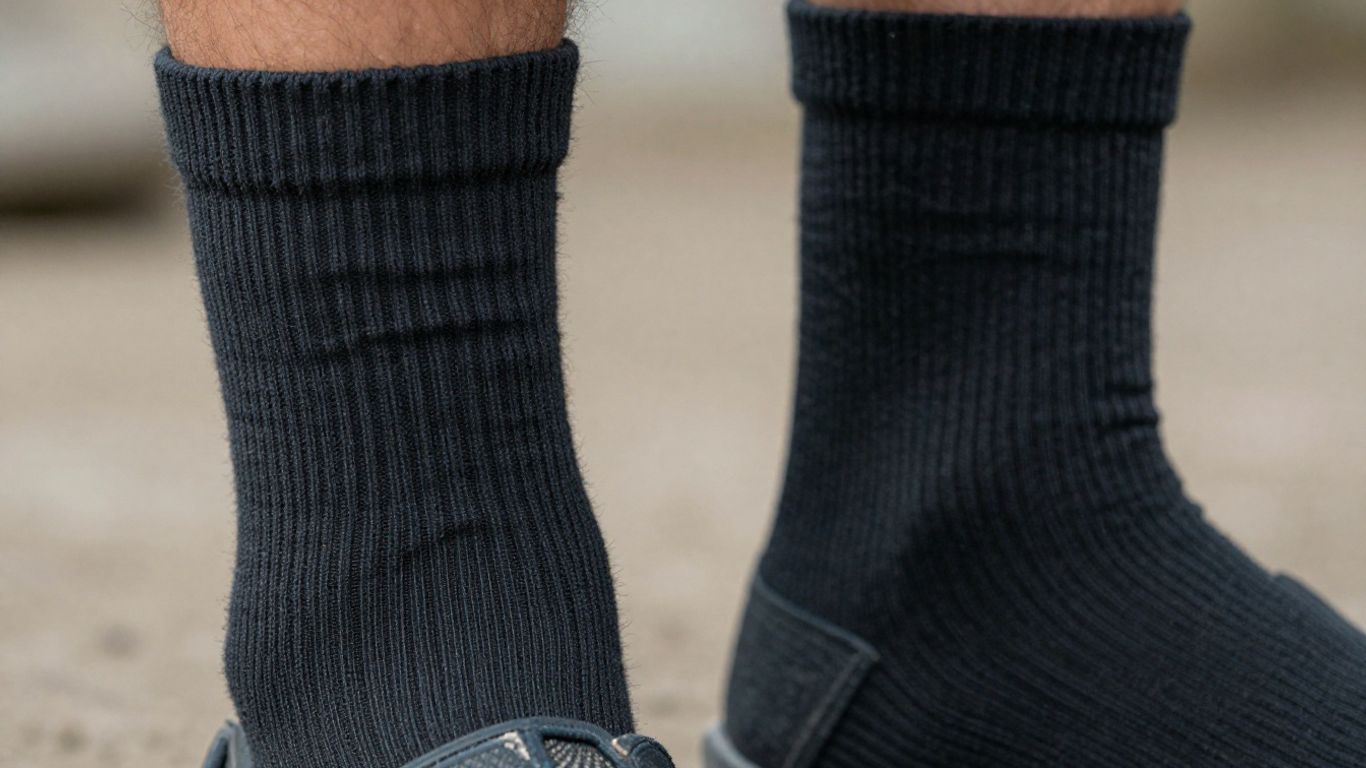
La hauteur de vos chaussettes compte plus que vous ne le pensez lorsque vous êtes sur le terrain. Ce n’est pas seulement une question d’apparence ; c’est une question de protection et de confort. Vous avez plusieurs options principales, chacune ayant un but différent.
Chaussettes de travail
Ce sont vos indispensables pour un travail sérieux. Les chaussettes de travail sont généralement plus hautes, atteignant souvent le mollet ou juste en dessous. Leur rôle principal est de créer une barrière entre votre peau et le matériau robuste de vos bottes de travail. Cette hauteur supplémentaire aide à prévenir les frottements et les irritations, surtout lors de longues journées passées à se pencher, s'accroupir et marcher. Elles offrent également plus de rembourrage et de soutien là où vous en avez le plus besoin, autour de la cheville et du bas de la jambe. Optez pour des matériaux durables capables de résister aux frottements constants sans s’user trop rapidement.
Chaussettes montantes
Les chaussettes montantes arrivent généralement à mi-mollet. Elles représentent un bon choix polyvalent pour de nombreuses tâches paysagères. Elles offrent une protection décente contre les frottements des bottes et peuvent empêcher certains petits débris de pénétrer dans vos bottes. Si vous ne portez pas de bottes très hautes ou ne travaillez pas sur un terrain particulièrement accidenté, les chaussettes montantes peuvent être une option confortable et pratique. Elles sont aussi assez polyvalentes pour différentes conditions météorologiques.
Chaussettes chevilles
Les chaussettes chevilles sont l’option la plus courte, arrivant juste au-dessus ou au niveau de la cheville. Bien qu’elles puissent sembler pratiques, surtout par temps chaud, elles offrent la protection la plus faible. Elles ne préviennent pas beaucoup les frottements des bottes sur le mollet et laissent passer plus de saletés et petits cailloux. Vous pouvez envisager des chaussettes chevilles pour la chaleur si vous travaillez dans des conditions très douces et portez des chaussures basses, mais pour la plupart des travaux paysagers, ce n’est probablement pas le meilleur choix. Elles conviennent mieux pour un usage décontracté ou des activités physiques moins exigeantes. Pour un travail sérieux, il vous faut plus de couverture.
Lorsque vous choisissez la hauteur de vos chaussettes, tenez toujours compte du type de bottes que vous portez et du travail que vous allez faire. Des chaussettes plus hautes offrent généralement une meilleure protection contre vos bottes et les éléments.
Amortissez l’impact
Vous êtes debout toute la journée, à marcher sur un terrain accidenté, à soulever des charges lourdes, et vos pieds en prennent vraiment plein la figure. C’est pourquoi l’amorti est important. Sans lui, vous risquez d’avoir des talons douloureux, des voûtes plantaires endolories, voire des ampoules à la fin de la semaine. Pensez-y : chaque pas sur le béton, chaque fois que vous descendez du camion, c’est un impact. De bonnes chaussettes absorbent une partie de ce choc.
Vous voulez une chaussette qui offre du soutien sans être encombrante ni rendre vos bottes trop serrées. Trop de rembourrage peut en fait être contre-productif, provoquant une surchauffe et une moindre sensation du sol. C’est une question d’équilibre. Cherchez des chaussettes rembourrées pour le travail en extérieur avec un rembourrage ciblé dans des zones clés comme le talon et la plante du pied. Ce sont les zones les plus sollicitées.
Voici ce qu’il faut rechercher :
- Amorti ciblé : Un rembourrage spécifiquement au niveau du talon et de l’avant-pied. C’est là que l’impact est le plus important.
- Soutien de la voûte plantaire : Un ajustement serré autour de la voûte aide à prévenir la fatigue et empêche la chaussette de se plisser.
- Zones renforcées : Un matériau supplémentaire au talon et à l’orteil augmente la durabilité et protège contre l’usure causée par vos bottes.
Lorsque vous choisissez votre équipement, surtout si vous regardez des chaussettes montantes pour bottes de travail, vérifiez les descriptions des produits. Elles vous indiqueront généralement où le rembourrage est concentré. Cela fait une réelle différence quand vous êtes dehors toute la journée.
Ne sous-estimez pas le pouvoir d'une chaussette bien rembourrée. Il ne s'agit pas seulement de confort ; c'est aussi pour prévenir les problèmes de pieds à long terme et vous garder productif pendant ces longues journées. Vos pieds vous remercieront.
Contrôlez l'humidité
Vos pieds vont se mouiller. Cela fait partie du travail, que ce soit la rosée du matin, un dysfonctionnement du système d'arrosage ou une averse inattendue. Le vrai problème n'est pas l'humidité elle-même, mais ce qu'elle fait à vos pieds sur une longue journée. Les chaussettes mouillées collent, frottent et créent l'environnement parfait pour les ampoules. C'est pourquoi choisir les bonnes chaussettes pour la gestion de l'humidité est indispensable.
Vous avez besoin de chaussettes qui tirent activement la sueur et l'eau loin de votre peau. C'est là que les chaussettes de travail à évacuation d'humidité brillent. Des matériaux comme les chaussettes de travail en laine mérinos sont fantastiques car ils peuvent absorber une quantité surprenante d'humidité sans donner une sensation de mouillé. Ils aident également à réguler la température, vous gardant plus frais quand il fait chaud et plus chaud quand il ne fait pas.
Voici ce qu’il faut rechercher :
- Évacuation de l'humidité : C'est la fonction principale. Le tissu doit déplacer l'humidité de votre peau vers les couches extérieures où elle peut s'évaporer. Recherchez des mélanges synthétiques ou des fibres naturelles comme la laine mérinos qui excellent dans ce domaine.
- Respirabilité : Même la meilleure chaussette qui évacue l'humidité ne sera pas efficace si elle retient la chaleur. Vous voulez que l'air circule autour de vos pieds pour aider à l'évaporation et éviter la surchauffe.
- Séchage rapide : Si vos chaussettes sont trempées, vous voulez qu'elles sèchent le plus vite possible. Cela minimise le temps pendant lequel vos pieds sont dans un état compromis.
Le coton est l'ennemi ici. Il retient l'humidité comme une éponge, rendant vos pieds froids, moites et sujets aux ampoules. Privilégiez les matériaux conçus pour gérer efficacement l'humidité.
Lorsque vous examinez les options de chaussettes, faites attention à la composition du tissu. De nombreuses chaussettes haute performance utilisent un mélange de matériaux pour obtenir le meilleur des deux mondes. Par exemple, une chaussette peut combiner les propriétés naturelles d'évacuation de l'humidité et de lutte contre les odeurs des chaussettes de travail en laine mérinos avec la durabilité des fibres synthétiques.
Gardez les débris à l’extérieur
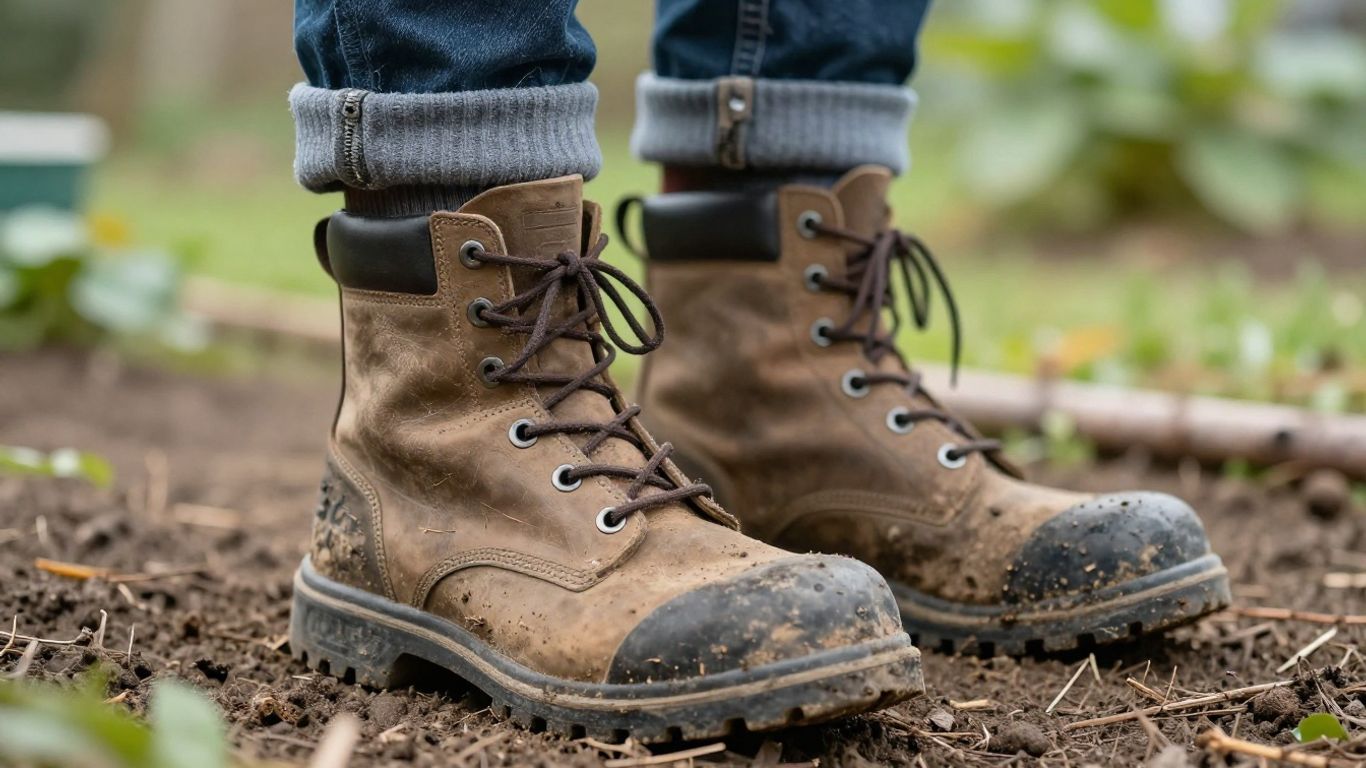
Vous êtes dehors toute la journée, confronté à la terre, au gravier, aux coupures d’herbe et à toutes sortes d’autres choses qui peuvent se glisser dans vos bottes. Personne ne veut qu’un caillou ou une motte de boue se retrouve dans sa chaussette. Ce n’est pas seulement agaçant ; cela peut provoquer des ampoules et un inconfort général qui rendent la journée insupportable.
La bonne hauteur de chaussette est votre première ligne de défense contre les intrus indésirables. Pensez-y comme un joint pour vos bottes. Des chaussettes suffisamment hautes, comme des chaussettes de travail ou des chaussettes montantes, créent une barrière qui empêche la plupart des petites saletés de pénétrer.
Voici ce qu’il faut rechercher :
- Hauteur : Optez pour des chaussettes qui montent au moins jusqu’au milieu du mollet. Cela couvre l’espace entre votre pantalon et vos bottes, empêchant les débris de tomber par le haut.
- Coupe : Un ajustement serré est essentiel. Des chaussettes trop lâches peuvent se plisser, créant des espaces où la saleté peut s’infiltrer. De plus, les plis favorisent rapidement les ampoules.
- Matériau : Bien que ce ne soit pas le facteur principal pour empêcher les débris d’entrer, les matériaux qui ne retiennent pas facilement la saleté et l’humidité facilitent le nettoyage. Privilégiez des tissages plus lisses plutôt que trop duveteux.
Une bonne paire de chaussettes agit comme une doublure secondaire pour vos bottes, gardant l’intérieur propre et vos pieds protégés des éléments et du sol lui-même.
Ne sous-estimez pas à quel point un simple morceau de tissu peut améliorer votre journée de travail. Garder vos bottes sans poussière signifie moins d’arrêts pour les vider et moins d’irritations aux pieds. C’est un petit détail qui fait une grande différence quand vous êtes debout pendant des heures. Si vous cherchez des chaussettes capables de faire le travail et de garder les saletés à l’extérieur, jetez un œil à quelques chaussettes de travail en laine mérinos durables.
Adaptez-vous à la météo
Journées chaudes
Quand le soleil tape fort et que la température monte, vous avez besoin de chaussettes qui tiennent la cadence. Oubliez le coton ; il retient la sueur et donne à vos pieds l'impression d'être dans un marécage. Vous cherchez des chaussettes pour le travail en extérieur par temps chaud, fabriquées à partir de matériaux respirants et qui évacuent l'humidité. Pensez à la laine mérinos légère ou aux mélanges synthétiques. Ces tissus éloignent la sueur de votre peau, laissent évaporer l'humidité et gardent vos pieds plus frais et plus secs. C’est essentiel pour éviter les ampoules et l’inconfort général quand vous êtes dehors toute la journée. Cherchez des chaussettes bien ventilées, avec peut-être même des panneaux en mesh, pour laisser circuler l’air.
Démarrages à froid
Les matins peuvent être rudes, surtout au printemps ou en automne. Vous sortez dans cet air frais, et vos pieds ressentent immédiatement le froid. Pour ces conditions, vous avez besoin de chaussettes qui offrent un peu d’isolation sans faire trop chauffer vos pieds une fois la journée réchauffée. Les chaussettes en laine de poids moyen sont un excellent choix ici. Elles gardent la chaleur même lorsqu’elles sont humides, ce qui est un gros avantage si vous travaillez dans l’herbe couverte de rosée ou sous une pluie inattendue. L’objectif est de garder vos pieds confortables du début à la fin de votre journée, quelle que soit la variation de température.
Travaux humides
Le paysagisme signifie souvent se mouiller, que ce soit à cause de la pluie, des arroseurs ou du travail près des points d’eau. Quand vos chaussettes sont trempées, elles peuvent rapidement provoquer des ampoules et rendre la journée insupportable. Les meilleures chaussettes de travail pour l’extérieur en conditions humides sont celles qui gèrent efficacement l’humidité. Des matériaux comme la laine mérinos sont excellents car ils peuvent absorber une bonne quantité d’humidité tout en gardant vos pieds relativement chauds et confortables. Elles sèchent aussi plus vite que le coton. Si vous savez que vous allez être souvent en contact avec de l’eau, pensez à des chaussettes à maille plus serrée qui n’absorberont pas autant de liquide dès le départ. Avoir une paire supplémentaire dans votre camion est toujours une bonne idée pour ce genre de travail. Vous pouvez trouver une bonne sélection de chaussettes de travail pour bottes conçues pour ces défis.
Où Hywell s’intègre
Quand vous êtes dehors à affronter la saleté, la transpiration et les longues heures, vous avez besoin d’un équipement qui suit le rythme. C’est là que les chaussettes Hywell entrent en jeu. Elles sont conçues pour résister aux exigences du paysagisme.
Pensez-y : vous êtes debout toute la journée, souvent dans des bottes qui peuvent frotter et irriter. L’attention portée par Hywell aux matériaux comme la laine mérinos signifie que vous bénéficiez d’une évacuation naturelle de l’humidité et d’un contrôle de la température, gardant vos pieds plus secs et plus confortables, quel que soit le temps. De plus, ils proposent des modèles spécifiques comme les chaussettes de bottes pour une meilleure couverture qui montent plus haut sur le mollet, vous offrant une protection supplémentaire contre les débris et les frottements des bottes.
Les bonnes chaussettes ne sont pas seulement une question de confort ; elles servent à prévenir les problèmes avant qu'ils ne commencent. Les ampoules, la transpiration et la fatigue peuvent vraiment vous ralentir. Investir dans de bonnes chaussettes, c'est investir dans votre propre capacité à accomplir votre travail.
Ils utilisent un amorti avancé dans les zones clés pour absorber les chocs, ce qui est très important lorsque vous marchez sur un terrain irrégulier ou que vous portez des charges lourdes. Il s'agit de s'assurer que vos pieds peuvent supporter l'effort, jour après jour. Vous bénéficiez d'un soutien là où vous en avez besoin, ce qui aide à réduire les douleurs et à vous maintenir en forme.
Vous vous demandez ce qui distingue les chaussettes Hywell ? Elles sont robustes, conçues pour le confort et faites pour durer. Nous croyons en une qualité que vous pouvez ressentir, que vous soyez au travail ou en pleine aventure. Prêt à améliorer votre expérience avec les chaussettes ? Visitez notre site web pour découvrir la collection complète Hywell et trouvez la paire parfaite pour vos besoins !
En résumé : vos pieds méritent mieux
Écoutez, vos pieds en prennent un coup chaque jour sur le terrain. Vous les sollicitez pendant des heures, souvent dans des conditions difficiles. Choisir les bonnes chaussettes, ce n’est pas seulement pour le confort, c’est pour passer la journée sans ampoules ni douleurs. Faites attention à leur composition – pensez à la laine ou aux fibres synthétiques qui évacuent la sueur, pas au coton qui la retient. Assurez-vous qu’elles soient bien ajustées, ni trop serrées ni trop lâches, et qu’elles tiennent bien en place. Un peu de rembourrage supplémentaire au talon et aux orteils fait aussi une grande différence. Investissez dans quelques bonnes paires ; vos pieds vous remercieront à la fin de chaque journée.
Questions fréquemment posées
Quel type de chaussettes devrais-je porter pour le travail paysager ?
Vous devriez porter des chaussettes qui tiennent bien, restent en place toute la journée et ne se plissent ni ne glissent. Cherchez des chaussettes fabriquées avec des matériaux comme la laine mérinos, le bambou ou des mélanges spéciaux avec du nylon et du spandex. Ils aident à garder vos pieds secs, confortables et soutenus.
Les chaussettes en coton sont-elles adaptées au jardinage ?
Les chaussettes en coton sont douces et abordables, mais elles absorbent la sueur et l'eau. Cela peut rendre vos pieds humides, froids, voire provoquer des ampoules. Il vaut mieux choisir des chaussettes qui évacuent l'humidité, comme la laine mérinos ou le bambou.
Comment empêcher mes chaussettes de glisser dans mes bottes ?
Choisissez des chaussettes avec des bords solides et un bon ajustement autour de la jambe. Les chaussettes montantes ou de travail tiennent généralement mieux que les chaussettes basses. Assurez-vous que vos chaussettes ne soient ni trop lâches ni trop étirées, et optez pour des modèles conçus pour les bottes de travail.
Quelle hauteur de chaussettes est la meilleure pour les paysagistes ?
La hauteur idéale dépend de vos bottes et du travail que vous effectuez. Les chaussettes montantes ou de travail protègent vos chevilles et mollets de la saleté, des insectes et des frottements. Les chaussettes basses sont plus fraîches mais laissent passer plus de débris. Pour la plupart des travaux de jardinage, les chaussettes montantes ou de travail sont les plus adaptées.
Comment garder mes pieds au sec lors de travaux humides ?
Portez des chaussettes qui évacuent l'humidité, fabriquées en laine mérinos, bambou ou mélanges synthétiques. Elles éloignent la sueur et l'eau de votre peau. Changez vos chaussettes si elles sont trempées et envisagez des traitements imperméabilisants pour une protection supplémentaire.
Comment puis-je faire durer mes chaussettes plus longtemps ?
Lavez vos chaussettes après chaque utilisation, en suivant les instructions d'entretien sur l'étiquette. N'utilisez pas d'eau chaude si les chaussettes sont en laine ou contiennent des fibres spéciales, car elles pourraient rétrécir. Évitez également les chaussettes qui se trouent facilement — privilégiez celles avec des orteils et des talons renforcés pour une durabilité accrue.