


Stress en cuisine
Travailler dans une cuisine professionnelle est éprouvant pour vos pieds. Ce n’est pas seulement une question de rester debout ; c’est tout l’environnement. Vous êtes debout pendant des heures, souvent au même endroit ou en vous déplaçant rapidement entre les postes, et les surfaces sur lesquelles vous vous tenez sont impitoyables.
Sols durs
Les cuisines commerciales ont généralement des sols en béton ou en carrelage. Ces surfaces sont extrêmement dures. Chaque pas que vous faites envoie une force d’impact directement dans vos pieds et vos jambes. Sur un long quart, ce martèlement constant peut entraîner un inconfort et une fatigue liés à la station debout prolongée importants. C’est une attaque incessante contre vos pieds que la plupart des gens ne connaissent pas dans leur vie quotidienne.
Chaleur humide
Les cuisines sont des endroits chauds, surtout près des plaques de cuisson et des fours. Les températures peuvent facilement dépasser les 38 °C. Cette chaleur monte de l’équipement et du sol, créant un environnement surchauffé pour vos pieds. Lorsqu’on ajoute la transpiration, c’est une recette pour l’inconfort et des problèmes potentiels aux pieds. Vos pieds doivent constamment lutter contre le sol dur et la chaleur montante.
Station debout prolongée
Les quarts de travail en cuisine sont notoirement longs, souvent de 10 à 14 heures. Vous ne restez pas simplement immobile ; vous êtes constamment en mouvement, pivotant, tendant la main, et parfois accroupi. Ce mouvement constant sur des surfaces dures, souvent humides, exerce une pression particulière sur vos pieds et vos jambes. C’est la combinaison de la durée et du mouvement qui vous épuise vraiment, menant à cette douleur profonde que les chefs connaissent trop bien. Trouver des chaussettes capables de supporter ce genre d’usure quotidienne est essentiel pour tenir votre quart sans vous sentir complètement épuisé. Il ne s’agit pas seulement de confort ; c’est aussi une question de prévention des blessures et de maintien des performances tout au long de la journée. Vous avez besoin de chaussettes capables de résister à la pression et à la friction constantes, surtout lorsque vous êtes en mouvement. La bonne paire peut faire une différence notable dans la sensation de vos pieds à la fin d’un double quart, aidant à atténuer l’inconfort lié à la station debout prolongée.
Le rembourrage compte
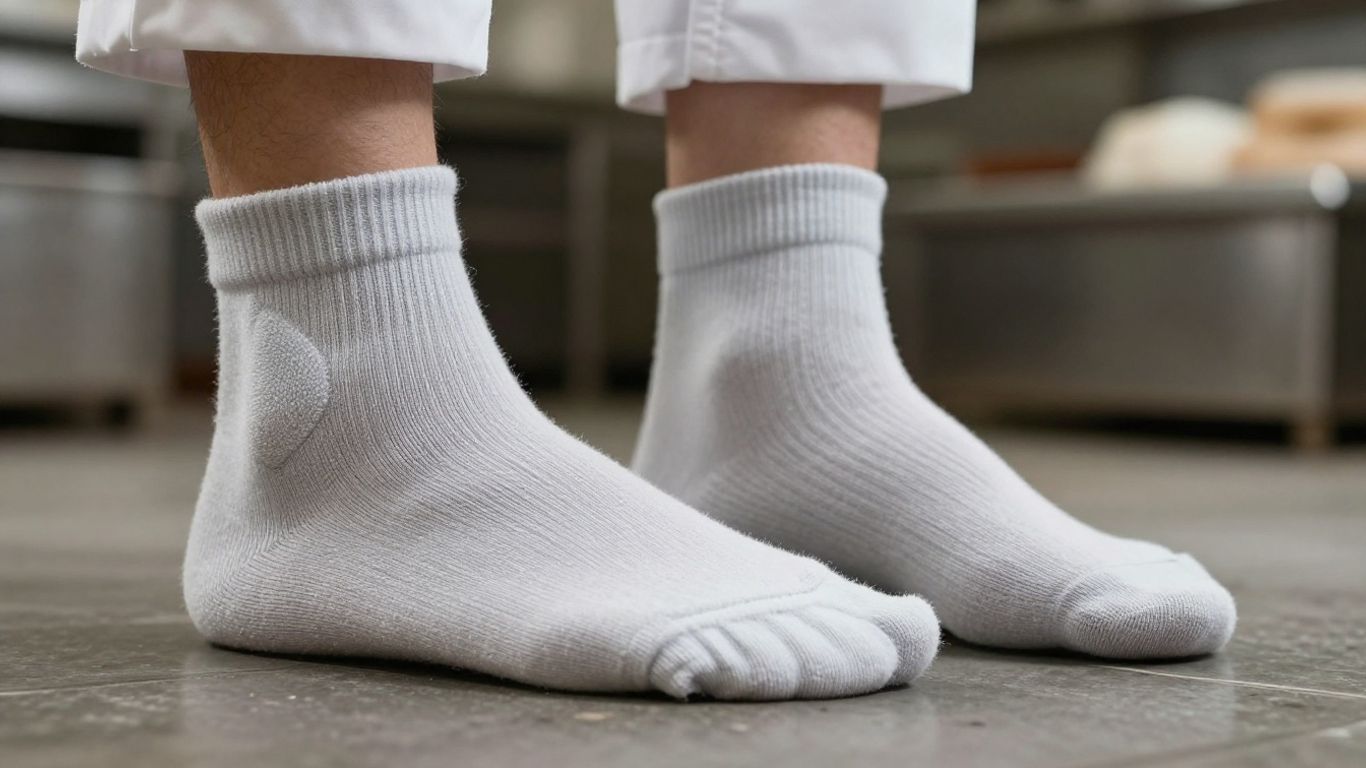
Vous êtes debout pendant des heures. On comprend. Le sol de la cuisine, qu'il soit en carrelage, béton ou autre, n'offre aucune souplesse. Cela signifie que vos pieds, chevilles et même vos genoux en prennent un coup. C'est là que le rembourrage entre en jeu. Ce n'est pas seulement une question de douceur ; c'est absorber les chocs et réduire l'impact à chaque pas.
Réfléchissez-y : un bon rembourrage agit comme un absorbeur de chocs pour tout votre corps. Lorsque vous restez debout pendant de longues heures, les impacts constants peuvent entraîner fatigue, douleurs, et même des problèmes plus graves à long terme. Les chaussettes avec un rembourrage intégré, surtout au talon et à la plante du pied, peuvent faire une énorme différence. Elles aident à répartir votre poids plus uniformément, soulageant ainsi la pression sur ces points clés qui supportent le poids de votre service.
Voici ce qu'il faut rechercher :
- Rembourrage ciblé : Certaines chaussettes ont des zones extra épaisses dans les zones à fort impact. C'est de l'or.
- Soutien de la voûte plantaire : Bien que ce ne soit pas strictement du rembourrage, un bon soutien de la voûte aide votre pied à maintenir sa structure naturelle, ce qui réduit indirectement la tension et la fatigue.
- Épaisseur générale : Une chaussette plus épaisse signifie généralement plus de rembourrage, mais assurez-vous qu'elle ne rende pas vos chaussures trop serrées.
La bonne quantité de rembourrage peut faire la différence entre finir votre service épuisé ou avoir l'impression de pouvoir rentrer chez vous sans grimacer. C'est une caractéristique simple, mais son impact sur votre confort et votre endurance est énorme.
Ne sous-estimez pas le pouvoir d'une chaussette bien rembourrée. C'est un petit investissement qui rapporte gros quand vous faites un double service ou une journée particulièrement exigeante. Cherchez des chaussettes conçues pour ce type d'usure, peut-être même celles avec une construction renforcée aux points de stress clés.
L'importance de l'humidité
Vos pieds vont transpirer. C’est un fait simple quand on travaille dans une cuisine chaude pendant plus de 10 heures. Ce qui arrive à cette sueur fait la différence entre un service confortable et un service pénible. Vous avez besoin de chaussettes qui évacuent activement l’humidité de votre peau, pas seulement qui l’absorbent. Les chaussettes en coton peuvent sembler douces au début, mais elles retiennent l’humidité comme une éponge. Cette humidité contre votre peau est un chemin rapide vers les ampoules et l’inconfort général. Vous cherchez des matériaux spécialement conçus pour les chaussettes de chef à évacuation d’humidité. Ces matériaux permettent à la sueur d’évaporer, gardant vos pieds plus secs même quand la chaleur est intense. Pensez-y : vous bougez constamment, pivotez et restez debout. Si vos chaussettes sont saturées, chaque pas, chaque mouvement crée de la friction. Cette friction, combinée à l’humidité, est une recette pour des points chauds douloureux et des ampoules qui peuvent vous mettre hors jeu. Investir dans de bonnes chaussettes à évacuation d’humidité n’est pas seulement une question de confort ; c’est une question de performance et de prévention des problèmes de pieds qui peuvent affecter les chefs. Certaines options avancées ont même des propriétés antimicrobiennes intégrées, ce qui aide à contrôler les odeurs, un vrai plus dans n’importe quelle cuisine. Pour les chefs sérieux, opter pour des chaussettes en laine mérinos ou en bambou est une bonne idée, car elles excellent dans la gestion de la sueur et gardent vos pieds plus agréables plus longtemps. Ces types de chaussettes sont conçus pour répondre aux exigences d’une cuisine professionnelle, faisant une vraie différence dans votre ressenti à la fin d’une longue journée. Pensez à des chaussettes avec des caractéristiques spécifiques de contrôle de l’humidité, surtout si vous avez tendance à avoir les pieds qui transpirent. des propriétés avancées d’évacuation de l’humidité sont essentielles ici.
L’ajustement des chaussures d’abord
Avant même de penser aux chaussettes, parlons de vos chaussures. Sérieusement, les meilleures chaussettes du monde ne vous sauveront pas si vos chaussures sont un désastre. Vous avez besoin de chaussures qui vous vont parfaitement, point final. Réfléchissez : vos chaussures sont la première ligne de défense contre les sols durs de la cuisine et le chaos général d’un long service. Si elles sont trop serrées, elles vont pincer et provoquer des ampoules, surtout quand vos pieds gonflent en fin de journée. Trop lâches, et vous allez glisser à l’intérieur, créant des points de friction que les chaussettes ne peuvent pas compenser entièrement.
Vos chaussures doivent être ajustées sans être trop serrées, avec suffisamment d’espace dans la boîte à orteils pour que vos orteils puissent bouger un peu. C’est non négociable. Vous êtes debout pendant des heures, et un bon ajustement des chaussures est la base du confort des pieds. C’est aussi essentiel pour prévenir des problèmes comme la fasciite plantaire et la fatigue générale des pieds.
Pensez aussi à l’environnement. Vos chaussures sont-elles antidérapantes ? Offrent-elles un bon maintien ? Si vos chaussures ne sont pas à la hauteur, même les chaussettes les plus performantes auront du mal. N'oubliez pas, vous pouvez toujours [changer de chaussettes quand elles sont mouillées](https://www.hywellstore.com/blogs/sock-style-guide/how-to-wear-no-show-socks), mais vous ne pouvez pas facilement changer de chaussures en plein service. Alors, investissez d'abord dans de bonnes chaussures, puis parlons chaussettes.
Meilleure hauteur de chaussettes
Quand vous êtes debout pendant 12, 14 heures, voire plus par jour, la hauteur de vos chaussettes ne concerne pas seulement l'apparence ; c'est une question de protection et de soutien. Pour les chefs, la bonne hauteur de chaussettes peut faire la différence entre finir votre service avec des pieds fatigués ou complètement abîmés. On parle ici de chaussettes qui travaillent aussi dur que vous, vous gardant à l'aise et prévenant les problèmes.
Chaussettes montantes
Les chaussettes montantes sont un excellent choix pour la plupart des environnements de cuisine. Elles arrivent généralement à mi-mollet, offrant un bon équilibre entre couverture et respirabilité. Cette longueur aide à éviter que vos chaussures ou sabots ne frottent directement contre votre peau, ce qui est un problème fréquent quand vous êtes en mouvement constant. De plus, elles apportent un peu de chaleur supplémentaire si la cuisine est fraîche, et elles s'accordent bien avec la plupart des types de chaussures de cuisine. Beaucoup des meilleures chaussettes pour chefs, notamment celles en laine mérinos, sont montantes car elles offrent cette couverture fiable.
Chaussettes basses
Les chaussettes basses peuvent sembler pratiques, mais elles ne sont généralement pas la meilleure option pour de longues heures en cuisine. Elles se placent souvent juste au-dessus de vos chaussures ou sabots, et quand vous bougez beaucoup, elles peuvent facilement glisser vers le bas. Cela provoque des plis à l'intérieur de vos chaussures, créant des points de pression inconfortables et des risques d'ampoules. Pour des chaussettes adaptées à la station debout en cuisine, il faut quelque chose qui reste en place et offre plus de protection. Si vous choisissez des chaussettes basses, assurez-vous qu'elles ont une bonne adhérence en haut et qu'elles sont fabriquées dans des matériaux qui évacuent l'humidité.
Paire de rechange
Il ne s'agit pas d'une hauteur spécifique, mais c'est un élément crucial pour gérer vos pieds lors de longues heures de travail. Ayez toujours, et je dis bien toujours, une paire de chaussettes de rechange avec vous. Des imprévus arrivent en cuisine – éclaboussures, fuites, trempages inattendus. Une chaussette mouillée est une recette pour les ampoules et l'inconfort. Avoir une paire sèche pour changer en plein service peut vous sauver la vie. Considérez cela comme une partie de votre équipement de chef, tout comme une serviette propre. Ce sont ce genre de conseils pratiques qui font vraiment la différence pour les chaussettes des travailleurs en restauration.
La bonne hauteur de chaussette ne consiste pas seulement à couvrir vos chevilles. Il s’agit de créer une barrière entre vos pieds et vos chaussures, d’éviter les frottements et de garantir que vos chaussettes restent en place tout au long de votre service. Pour les chaussettes de chef lors de longues journées, la hauteur mi-mollet ou un peu plus haut offre souvent la meilleure protection et le meilleur soutien.
Évitez ces erreurs
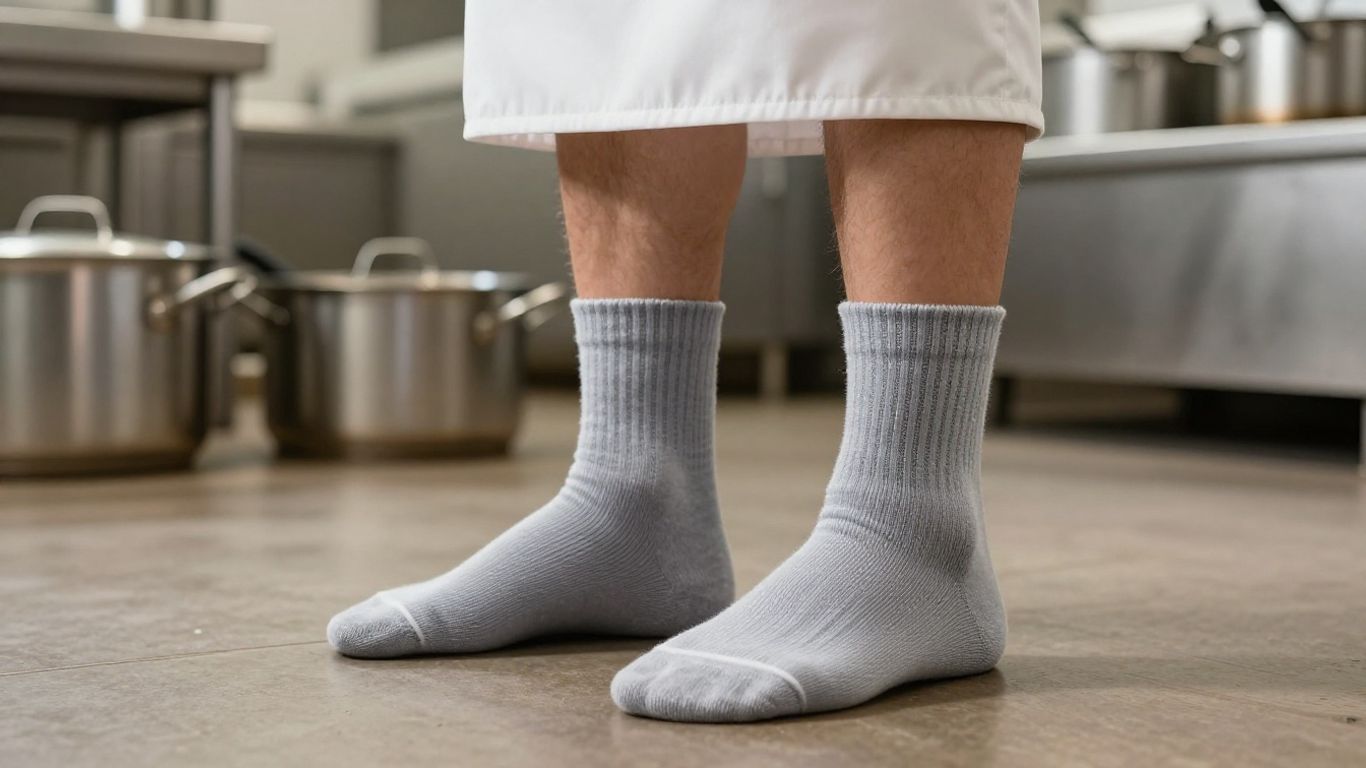
Si vous travaillez de longues heures sur des sols et chaussures durs, même les meilleures chaussures de cuisine ne vous sauveront pas d’un mauvais choix de chaussettes. Choisir des chaussettes de chef ne se limite pas à prendre n’importe quelle paire — certaines erreurs ruineront votre confort, provoqueront des ampoules et rendront votre journée plus longue qu’elle ne devrait l’être.
Porter du coton
Les chaussettes en coton semblent confortables au début, mais elles retiennent l’humidité comme une éponge. Après une heure ou deux, le coton devient une véritable usine à ampoules.
- Le coton absorbe la sueur mais ne sèche pas rapidement.
- La sueur et la chaleur piégées contre votre pied provoquent frottements et dégradation de la peau.
- Les bactéries prospèrent dans le coton humide, augmentant les odeurs.
| Matériau des chaussettes | Évacuation de l’humidité | Contrôle des odeurs | Durabilité |
|---|---|---|---|
| Coton | Médiocre | Médiocre | Faible |
| Bambou | Excellent | Très bon | Élevé |
| Laine mérinos | Très bon | Excellent | Élevé |
Choisissez toujours des fibres techniques comme le bambou ou le mérinos plutôt que le coton si vous le pouvez.
Ignorer les chaussettes mouillées
Une chaussette de cuisine sèche au début de la journée ne le restera pas. Enfilez une paire humide après votre pause, ou restez toute la journée avec des chaussettes en sueur, et les ampoules apparaîtront soudainement.
- Chaussettes mouillées + frottement = ampoules rapides.
- L’humidité fait s’user les chaussettes plus rapidement.
- Les bactéries et les odeurs se multiplient dans un environnement humide.
Changez de paire fraîche et sèche à mi-service si possible — vos pieds et vos chaussures dureront plus longtemps.
Choisir le volume
Il est tentant de choisir le rembourrage le plus épais pour affronter les sols durs et les chaussures, mais un excès de volume cause plus de problèmes qu’il n’en résout.
- Des chaussettes épaisses peuvent rendre les chaussures trop serrées, coupant la circulation.
- Un rembourrage excessif se comprime lorsque vos pieds gonflent pendant le service, provoquant des points de pression.
- Vous voulez de l'amorti, mais la chaussette doit épouser votre pied sans le comprimer.
Cherchez plutôt des talons/orteils renforcés, un soutien de la voûte plantaire et un mélange de matériaux intelligent — pas seulement de l'épaisseur. Les chaussettes montantes avec la bonne construction trouvent un équilibre entre protection et confort, comme expliqué dans les avantages des matériaux des chaussettes montantes.
Si vous détestez la douleur aux pieds après un service, faites attention à ces erreurs évitables — le bon choix de chaussettes fait toute la différence lors de ces journées marathon.
Où Hywell s'inscrit
Lorsque vous êtes debout pendant 12, 14, voire 16 heures, vos jambes et vos pieds en prennent un coup. C'est là que les chaussettes conçues pour l'effort, comme celles de Hywell, entrent en jeu. Ce ne sont pas des chaussettes ordinaires ; elles sont dotées de caractéristiques spécifiques pour lutter contre les défis uniques d'un environnement de cuisine. Pensez au fait de rester constamment debout sur des sols durs – cela s'accumule, entraînant une fatigue liée au travail debout sérieuse. Les chaussettes Hywell intègrent souvent une compression ciblée et un soutien de la voûte plantaire pour aider à répartir cette pression plus uniformément. Cela peut vraiment faire la différence dans la sensation de vos pieds à la fin d'un double service.
L'accent mis par Hywell sur la durabilité et le confort signifie que vous investissez dans des chaussettes capables de supporter la chaleur et l'effort. Ils comprennent que les chefs ont besoin de plus que de simples protections pour les pieds ; ils ont besoin d'équipements performants.
Considérez leurs options pour des chaussettes montantes pour chaussures de travail. Elles sont conçues pour rester en place, offrir un amorti là où vous en avez le plus besoin, et évacuer l'humidité pour garder vos pieds au sec et prévenir les ampoules. Il s'agit de réduire les points de friction et de fournir une base stable, afin que vous puissiez vous concentrer sur la nourriture, pas sur vos pieds.
- Évacuation de l'humidité : Garde les pieds au sec, réduisant le risque d'ampoules.
- Soutien de la voûte plantaire : Aide à combattre la fatigue liée au fait de rester debout sur des surfaces dures.
- Zones renforcées : Conçues pour résister à l'abrasion des sols de cuisine et des chaussures.
- Maintien en place : Empêche les plis et les points de pression à l'intérieur de vos chaussures.
Vous vous demandez ce qui distingue les chaussettes Hywell ? Elles sont robustes, conçues pour le confort et faites pour durer. Nous croyons en une qualité que vous pouvez ressentir, que vous soyez au travail ou en pleine aventure. Prêt à améliorer votre expérience avec les chaussettes ? Visitez notre site web pour découvrir la collection complète Hywell et trouver la paire parfaite pour vos besoins !
Conclusion
Si vous passez vos journées debout dans une cuisine animée, les bonnes chaussettes font vraiment la différence. Vous voulez quelque chose qui garde vos pieds au sec, résiste aux mouvements constants et ne s’abîme pas après quelques lavages. Le bambou et la laine mérinos sont vos meilleurs alliés : ils gèrent la transpiration, combattent les odeurs et durent plus longtemps que le coton. Cherchez des chaussettes avec des talons et des orteils renforcés, un peu de soutien de la voûte plantaire et un ajustement qui ne glisse pas en plein service. La compression est utile si vous travaillez de longues heures ou si vos jambes sont fatiguées. Faites tourner plusieurs paires, lavez-les après chaque service et laissez-les sécher à l’air libre quand vous le pouvez. Ne les gardez pas jusqu’à ce qu’elles soient pleines de trous : remplacez-les tous les 8 à 12 mois, ou plus tôt si elles perdent leur forme. Prenez soin de vos pieds, ils prendront soin de vous à chaque coup de feu.
Questions fréquemment posées
À quelle fréquence dois-je laver mes chaussettes de cuisine ?
Vous devriez laver vos chaussettes de cuisine après chaque service. Elles absorbent la transpiration, la graisse et les germes, donc les nettoyer souvent garde vos pieds en bonne santé et prolonge la durée de vie des chaussettes. Utilisez de l’eau froide ou tiède, pas chaude, pour protéger le tissu. Faites-les sécher à l’air libre si possible, car la chaleur élevée du sèche-linge peut abîmer l’élasticité et le maintien.
Quel est le meilleur matériau pour des chaussettes dans une cuisine chaude ?
Le bambou et la laine mérinos sont les meilleurs choix pour les cuisines chaudes. Ils évacuent la transpiration de la peau, sèchent rapidement et empêchent les mauvaises odeurs. Le coton n’est pas recommandé car il retient l’humidité et la chaleur, ce qui rend vos pieds humides et inconfortables pendant les longues heures de travail.
Comment savoir quand il est temps de remplacer mes chaussettes de chef ?
Si vos chaussettes sont lâches au niveau de la voûte plantaire, que le rembourrage du talon est fin ou qu'elles ne soutiennent plus vos pieds comme avant, il est temps d'en changer. Même si elles ont l'air correctes à l'extérieur, des chaussettes qui ont perdu leur forme ou leur coussinet ne protégeront pas bien vos pieds. Avec un bon entretien et une rotation régulière, des chaussettes de qualité pour la cuisine peuvent durer de 8 à 12 mois.