


Kurze Antwort
Wenn Sie Socken für Ihre taktischen Stiefel auswählen, denken Sie daran, was Ihre Füße brauchen, um den ganzen Tag über bequem und funktional zu bleiben. Die besten Socken leiten Feuchtigkeit ab, polstern wichtige Stellen und bleiben ohne Faltenbildung an Ort und Stelle.
Hier die kurze Zusammenfassung:
- Material ist wichtig: Merinowolle ist eine Top-Wahl, da sie Feuchtigkeit natürlich ableitet und die Temperatur reguliert. Sie ist ideal, weil Wolle Feuchtigkeitsdampf absorbiert und Ihre Füße trockener hält als Baumwolle.
- Höhe ist entscheidend: Passen Sie die Sockenhöhe an die Stiefelhöhe an. Kürzere Socken können bei höheren Stiefeln zu Scheuerstellen führen.
- Polsterung: Achten Sie auf Socken mit zusätzlicher Polsterung in stark beanspruchten Bereichen wie Ferse und Ballen, um Blasen und Unbehagen zu vermeiden.
- Passform: Eine enge Passform ist wichtig. Zu lockere Socken bilden Falten und verursachen Druckstellen, während zu enge Socken die Durchblutung einschränken können.
Die Wahl der richtigen Socken ist genauso wichtig wie die Wahl der richtigen Stiefel. Ihre Füße sind Ihre Grundlage, und wenn sie glücklich sind, können Sie sich auf die Aufgabe konzentrieren, statt auf schmerzhafte Blasen oder schwitzigen Komfortmangel.
Stiefelhöhe anpassen
Wenn Sie Stiefelsocken für taktische Stiefel auswählen, spielt die Höhe Ihres Schuhwerks eine große Rolle. Es geht nicht nur um das Aussehen, sondern darum, Ihre Haut zu schützen und lästiges Scheuern zu verhindern. Denken Sie an die Geschichte der militärischen Stiefelgeschichte – Soldaten brauchten Ausrüstung, die funktionierte, und dazu gehörten Socken, die an Ort und Stelle blieben und ihre Füße schützten.
6-Zoll-Stiefel
Für Stiefel, die bis zum Knöchel oder etwas darüber reichen, sollten die Socken mindestens bis zur Mitte der Wade reichen. Diese zusätzliche Höhe ist entscheidend. Sie schafft eine Barriere zwischen dem oberen Rand Ihres Stiefels und Ihrer Haut. Ohne sie riskieren Sie Reibung und Blasen, besonders wenn Sie sich viel bewegen. Ein guter Socken bis zur Mitte der Wade bleibt ohne Faltenbildung sitzen und sorgt für einen sanften Übergang von der Haut zum Stiefel.
8-Zoll-Stiefel
Bei 8-Zoll-Stiefeln, die für viele taktische Situationen ziemlich standard sind, hast du mehr Abdeckung. Deine Socke sollte definitiv über den Stiefelrand hinausreichen. Ziel sind Socken, die etwa 10 bis 12 Zoll hoch sind. So ist sichergestellt, dass selbst beim Bücken, Knien oder Klettern keine Haut am oberen Stiefelrand freiliegt. Es geht um durchgehenden Schutz.
Hohe Stiefel
Wenn du höhere Stiefel trägst, vielleicht 10 Zoll oder mehr, brauchst du passende Socken. Diese werden oft „über die Wade“ Socken genannt. Sie sollten bequem dein Bein hochreichen, weit über den Stiefelrand hinaus. Das ist besonders wichtig, wenn du eine schwere Last trägst oder lange Strecken zurücklegst. Die zusätzliche Länge hilft, den Druck zu verteilen und verhindert, dass der Stiefelkragen in dein Bein einschneidet. Das Ziel ist immer, dass deine Socke mindestens ein bis zwei Zoll über den Stiefelrand hinausreicht.
Die Wahl der richtigen Sockenhöhe ist nicht nur eine Frage des Komforts; es ist ein praktischer Schritt, um Verletzungen vorzubeugen und sicherzustellen, dass deine Ausrüstung mit dir arbeitet, nicht gegen dich. Es ist ein kleines Detail, das im Einsatz einen großen Unterschied macht.
Feuchtigkeit kontrollieren
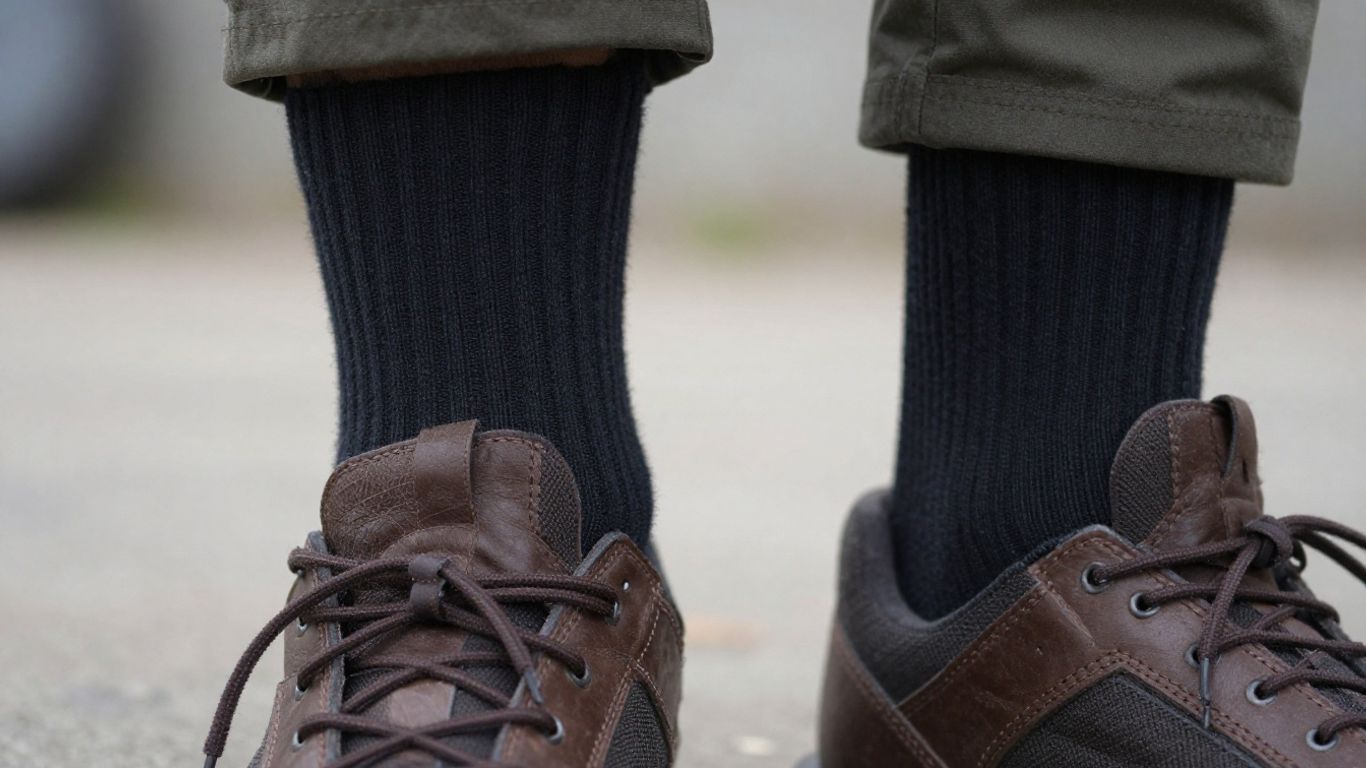
Deine Füße werden schwitzen, besonders wenn du dich in taktischen Stiefeln bewegst. Das ist einfach eine Tatsache. Wenn der Schweiß nur dort bleibt, ist das ein sicherer Weg zu Blasen und allgemeinem Unbehagen. Du brauchst Socken, die mit der Feuchtigkeit umgehen können. Suche nach feuchtigkeitsableitenden Stiefelsocken, die den Schweiß von deiner Haut wegziehen.
Stell es dir so vor: Deine Stiefel sind eine geschlossene Umgebung. Ohne gutes Feuchtigkeitsmanagement wird alles darin feucht. Hier kommt das richtige Sockmaterial ins Spiel. Synthetik und Merinowolle sind hier deine besten Optionen. Sie sind dafür gemacht, Feuchtigkeit von deinem Fuß nach außen zur Socke zu transportieren, wo sie verdunsten kann. Baumwolle? Vergiss es. Sie hält Feuchtigkeit wie ein Schwamm fest.
Hier ist die Aufschlüsselung:
- Synthetik: Oft Polyester- oder Nylonmischungen. Sie sind hervorragend darin, Feuchtigkeit abzuleiten und trocknen schnell. Manche können nach einem langen Tag jedoch etwas unangenehm riechen.
- Merinowolle: Dieses Material leitet Feuchtigkeit auf natürliche Weise gut ab und hilft auch, die Temperatur zu regulieren. Es ist von Natur aus antimikrobiell und bekämpft Gerüche besser als synthetische Stoffe. Es ist meist teurer und benötigt beim Waschen etwas mehr Pflege.
- Mischungen: Viele der besten Socken kombinieren diese Materialien, um die Vorteile beider zu nutzen.
Das Ziel ist, deine Füße so trocken wie möglich zu halten, egal was du tust. Nasse Füße führen einfach zu Problemen. Die richtigen Socken zu wählen, macht einen großen Unterschied, um komfortabel zu bleiben und Probleme zu vermeiden.
Polsterung an Hot Spots
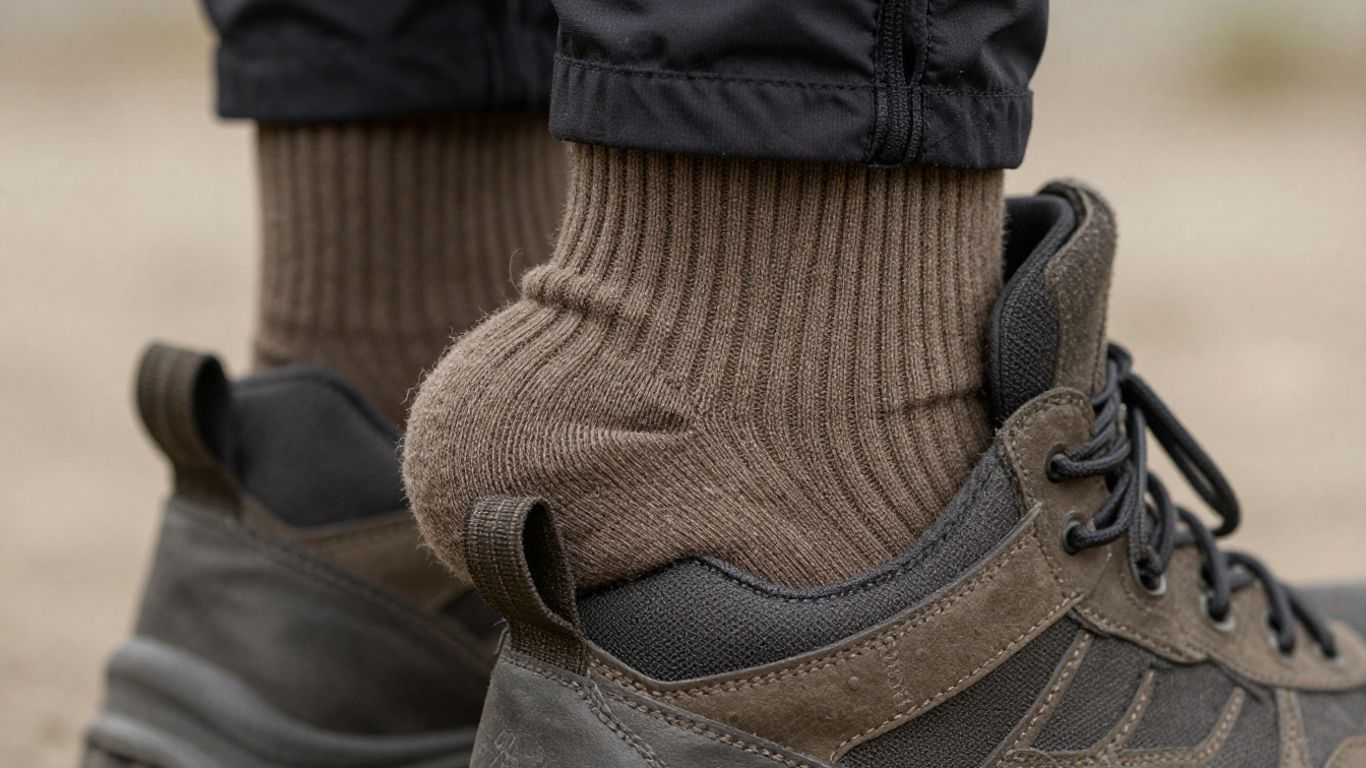
Wenn du den ganzen Tag auf den Beinen bist, besonders in taktischen Stiefeln, werden bestimmte Stellen stark beansprucht. Denk an die Ferse, den Fußballen oder auch unter den Schnürsenkeln. Das sind deine „Hot Spots“, und wenn du ihnen keine Aufmerksamkeit schenkst, können sie zu Blasen oder schmerzhaftem Reiben führen.
Die richtige Polsterung macht einen großen Unterschied, um Unbehagen und Ermüdung vorzubeugen. Es geht nicht nur darum, eine dicke Socke zu haben, sondern um strategische Polsterung an den wichtigsten Stellen. Suche nach gepolsterten taktischen Socken mit extra Frottierschleifen an Schlüsselstellen. Diese Polsterung wirkt wie ein Stoßdämpfer und reduziert die Belastung deiner Füße bei jedem Schritt.
Darauf solltest du achten:
- Gezielte Polsterung: Manche Socken haben Polster nur an der Sohle, andere zusätzlich an Ferse, Zehen und sogar um den Knöchel herum. Mehr Polsterung bedeutet meist mehr Komfort, kann aber auch mehr Volumen bedeuten, also finde die richtige Balance.
- Material ist wichtig: Während die Polsterung entscheidend ist, spielt das Material der Socke ebenfalls eine Rolle. Du möchtest etwas, das gut mit der Polsterung zusammenarbeitet. Denke an feuchtigkeitsableitend statt Baumwolle – Baumwolle speichert Feuchtigkeit, was den Füßen schadet.
- Passform ist alles: Selbst die beste gepolsterte Socke hilft nicht, wenn sie sich zusammenzieht oder verrutscht. Achte darauf, dass die Socke eng anliegt, ohne zu drücken, und dass die Polsterung an ihrem Platz bleibt.
Unterschätze nicht die Wirkung guter Polsterung. Es ist eine einfache Lösung, die deinen Komfort erheblich verbessern kann, besonders an langen Tagen oder bei anspruchsvollen Einsätzen. Es geht darum, deine Füße vor dem ständigen Druck und der Reibung zu schützen, die taktische Stiefel verursachen können.
Vermeide das Verrutschen der Socken
Niemand möchte, dass sich seine Socken in den taktischen Stiefeln zusammenziehen. Das ist nicht nur nervig, sondern führt schnell zu Blasen und Unbehagen, besonders wenn man den ganzen Tag auf den Beinen ist. Die besten taktischen Stiefelsocken sind so konzipiert, dass sie an Ort und Stelle bleiben.
Der Schlüssel ist eine richtige Passform und gute Materialverarbeitung. Wenn Ihre Socken zu locker sind, bilden sich Falten und Knicke, die Reibungspunkte verursachen. Sind sie zu eng, können sie Ihre Füße einschnüren, aber sie rutschen weniger leicht herunter.
Darauf sollten Sie achten, damit Ihre Socken an Ort und Stelle bleiben:
- Fersentasche: Stellen Sie sicher, dass die Fersenkappe der Socke gut an Ihre Ferse passt. Wenn zu viel Stoff vorhanden ist, wird er sich zusammenziehen.
- Knöchel- und Wadenbänder: Achten Sie auf Socken mit einem gut gestalteten elastischen Band um den Knöchel und den oberen Teil der Wade. Es sollte eng genug sein, um die Socke oben zu halten, ohne die Durchblutung abzuschneiden.
- Materialmischung: Einige synthetische Fasern wie Spandex oder Lycra werden eingearbeitet, um den Socken Dehnbarkeit zu verleihen und ihnen zu helfen, am Fuß und Bein zu haften. Das ist eine große Hilfe bei Militär- und Polizeistiefelsocken.
Socken mit Ihren tatsächlichen Stiefeln anzuprobieren ist der beste Weg, um ein Verrutschen zu überprüfen. Gehen Sie ein wenig herum. Fühlen sie sich so an, als würden sie an ihrem Platz bleiben? Wenn Sie zwischen zwei Sockengrößen liegen, kann manchmal eine etwas dickere Socke den Stiefel besser ausfüllen und Bewegungen verhindern.
Wenn Sie nach den besten Socken für Dienststiefel oder andere ernsthafte Schuhe suchen, achten Sie darauf, wie sie konstruiert sind, um nicht herunterzurutschen. Ob Sie Merinowollstiefelsocken oder Hightech-Synthetik bevorzugen, eine Socke, die an ihrem Platz bleibt, macht einen großen Unterschied für Ihren Komfort und Ihre Leistung. Unterschätzen Sie nicht die Bedeutung dieses einfachen Merkmals bei Ihren taktischen Stiefelsocken.
Material wählen
Wenn Sie Socken für Ihre taktischen Stiefel auswählen, ist das Material sehr wichtig. Es geht nicht nur um Komfort, sondern auch darum, wie Ihre Füße mit Schweiß, Hitze und der Reibung umgehen, die bei harten Einsätzen oder langen Wanderungen entstehen. Vergessen Sie die alten Baumwollsocken, die Sie vielleicht für den Alltag getragen haben. Baumwolle saugt Feuchtigkeit wie ein Schwamm auf und braucht ewig zum Trocknen, was schnell zu Blasen und nassen Füßen führt. Sie brauchen etwas, das mit Ihren Füßen arbeitet, nicht gegen sie.
Die besten Materialien für taktische Socken sind Synthetik und Wolle, besonders Merinowolle.
Synthetische Materialien wie Polyester, Nylon und Polypropylen sind so konzipiert, dass sie Feuchtigkeit von der Haut wegtransportieren. Das bedeutet, dass Schweiß zur Außenseite der Socke gezogen wird, wo er verdunsten kann, wodurch Ihre Füße trockener bleiben. Sie sind in der Regel langlebig und trocknen ziemlich schnell, wenn sie doch mal nass werden. Der Nachteil? Einige Synthetikstoffe können nach ein oder zwei Tagen anfangen zu riechen, besonders wenn Sie Ihre Socken nicht wechseln können.
Merinowolle ist ein echter Star. Sie ist von Natur aus gut darin, Feuchtigkeit zu managen und von der Haut wegzuziehen. Außerdem hält sie deine Füße warm, selbst wenn sie feucht ist, was bei kalten oder nassen Bedingungen ein großer Vorteil ist. Anders als die Wollsocken, die dein Opa vielleicht getragen hat, ist moderne Merinowolle weich und überhaupt nicht kratzig. Sie hat auch natürliche geruchshemmende Eigenschaften, sodass du sie oft länger tragen kannst, ohne dass sie unangenehm riechen. Der Hauptnachteil ist, dass Merinosocken teurer sein können und beim Waschen etwas mehr Pflege benötigen, damit sie lange halten.
Hier eine kurze Zusammenfassung:
- Synthetik (Polyester, Nylon, Polypropylen): Ideal zum Ableiten von Feuchtigkeit, langlebig, trocknet schnell. Kann unangenehm riechen.
- Merinowolle: Hervorragendes Feuchtigkeitsmanagement, bleibt warm, wenn sie nass ist, natürlich geruchsresistent, weich. Teurer, benötigt sorgfältige Pflege beim Waschen.
Wenn du dich entscheidest, denk daran, die Sockenhöhe an die Stiefel anzupassen. Zum Beispiel möchtest du wahrscheinlich Crew-Socken für Dienststiefel, um Reibung durch den Stiefelkragen zu vermeiden. Das richtige Material ist deine erste Verteidigungslinie gegen Fußprobleme, also spar hier nicht.
Ein besseres Stiefel-Setup
Schau, das richtige Stiefel-Setup zu finden, ist mehr als nur ein Paar Socken auszuwählen. Es geht darum, ein System zu schaffen, das für deine Füße funktioniert, besonders wenn du draußen unterwegs bist. Du willst diese unangenehmen schwitzigen Füße in Stiefeln vermeiden, die deinen Tag ruinieren oder schlimmer noch, zu Blasen und anderen Fußproblemen führen können. Es geht darum, sicherzustellen, dass alles von deinem Fuß bis zum Stiefel zusammenpasst.
Denk daran: Deine Socken sind die Brücke zwischen deiner Haut und deinen Stiefeln. Wenn diese Brücke schwach ist, fällt alles andere auseinander. Du brauchst Socken, die Feuchtigkeit ableiten, die richtigen Stellen polstern und an Ort und Stelle bleiben. Wenn du das richtig machst, bleiben deine Füße trockener, kühler und glücklicher, egal was du tust.
Hier ist eine kurze Übersicht, was ein gutes Stiefel-Setup ausmacht:
- Richtige Passform: Das ist unverhandelbar. Deine Socken sollten sich nicht zusammenziehen und weder zu eng noch zu locker sitzen. Eine gute Passform bedeutet, dass die Ferse dort sitzt, wo sie sein soll, und kein überschüssiges Material an der Zehenpartie ist. Das verhindert Reibung, die Hauptursache für Blasen.
- Material ist wichtig: Wir haben das schon besprochen, aber es lohnt sich, es zu wiederholen. Merinowolle und gute Synthetikfasern sind deine Freunde. Sie regulieren Feuchtigkeit und sind atmungsaktiv. Baumwolle ist hier der Feind.
- Höhe und Dicke: Passe die Sockenhöhe an die Stiefelhöhe an. Du möchtest, dass sie sich überlappen, um Reibung zu vermeiden. Die Dicke hängt von der Passform des Stiefels und den Bedingungen ab, aber generell solltest du genug Polsterung haben, ohne dass die Stiefel zu eng werden.
- Schichten (manchmal): Für extreme Bedingungen kann eine dünne Innensocke unter einer dickeren Stiefelsohle helfen, Feuchtigkeit noch besser zu kontrollieren. Achte nur darauf, dass diese Kombination deine Stiefel nicht zu eng macht.
Die Kombination aus Socke und Stiefel richtig abzustimmen, ist ein echter Game-Changer. Es geht nicht nur um Komfort, sondern auch um Leistung und die Vermeidung von Fußverletzungen. Nimm dir die Zeit, das Richtige für dich zu finden, und deine Füße werden es dir danken.
Unterschätze nicht die Kraft einer gut durchdachten Boot-Einrichtung. Sie ist die Grundlage für komfortable und produktive Tage auf den Beinen.
Möchtest du sicherstellen, dass dein Computer jedes Mal richtig startet? Wir haben die Tipps, die du brauchst, um deinen Boot-Prozess erfolgreich einzurichten. Erfahre, wie du dein System von Anfang an reibungslos zum Laufen bringst. Besuche noch heute unsere Website, um die beste Boot-Einrichtung für deine Bedürfnisse zu entdecken!
Deine Sockensuche abschließen
Du hast also die Optionen gesehen. Die richtigen Socken für deine taktischen Stiefel auszuwählen, geht nicht nur um Komfort, sondern darum, deine Füße in gutem Zustand zu halten, egal was du machst. Ob du im Einsatz bist, im Fitnessstudio trainierst oder einfach eine lange Wanderung machst – das richtige Paar macht einen großen Unterschied. Spare nicht an dieser Ausrüstung; deine Füße werden es dir danken. Denk an die Materialien, wie sie sitzen und unter welchen Bedingungen du sie trägst. Ein gutes Paar Socken kann dein gesamtes Erlebnis wirklich verändern.
Häufig gestellte Fragen
Warum ist das Material meiner Socke bei taktischen Stiefeln so wichtig?
Das Material deiner Socke ist super wichtig, weil es hilft, deine Füße bequem und trocken zu halten. Stell es dir so vor: Baumwollsocken werden nass und bleiben nass, was zu Blasen und unangenehmen Fußproblemen führen kann. Materialien wie Merinowolle oder spezielle Synthetikfasern sind viel besser darin, Schweiß von der Haut wegzuleiten, sodass deine Füße bei Hitze kühler und bei Kälte wärmer bleiben. Das bedeutet weniger Blasen und glücklichere Füße, selbst wenn du den ganzen Tag schwere Stiefel trägst.
Woran erkenne ich, welche Sockenhöhe ich zu meinen taktischen Stiefeln tragen sollte?
Die Höhe deiner Socke hängt wirklich von der Höhe deines Stiefels ab. Bei kürzeren Stiefeln, wie 15 cm hohen, funktionieren meist Socken bis zur Mitte der Wade sehr gut. Hast du höhere Stiefel, etwa 20 cm oder mehr, solltest du Socken wählen, die bis zum oder sogar über den Stiefelrand reichen. So vermeidest du, dass der Stiefel direkt auf der Haut reibt und schmerzhafte Scheuerstellen verursacht.
Was bedeutet „Feuchtigkeitsableitung“ eigentlich für meine Füße?
Feuchtigkeitsableitung ist ein schicker Begriff dafür, wie gut eine Socke Schweiß von deinem Fuß wegtransportiert. Stell dir vor, deine Socke ist wie ein Schwamm, der nicht Wasser aufsaugt, sondern es von deiner Haut wegzieht und an die Luft abgibt. So bleiben deine Füße trocken, was entscheidend ist, um Blasen und dieses unangenehme, feuchte Gefühl zu vermeiden – besonders wenn du aktiv bist.
Warum sollte mir die Polsterung meiner Socken wichtig sein?
Polsterung in deinen Socken ist wie zusätzliches Polster an genau den richtigen Stellen. Taktische Stiefel können steif sein, und lange Tage belasten deine Füße stark. Socken mit extra Polsterung, besonders an Ferse, Ballen und rund um die Schnürsenkel, wirken wie Stoßdämpfer. Das verhindert schmerzhafte Druckstellen und macht das Gehen oder Stehen über längere Zeit viel angenehmer.
Können Socken wirklich helfen, Blasen zu verhindern?
Absolut! Socken sind deine erste Verteidigungslinie gegen Blasen. Blasen entstehen, wenn deine Haut durch Reibung und Feuchtigkeit aufgerieben wird. Die richtigen Socken, aus Materialien, die Schweiß ableiten und eng anliegen, ohne Falten zu werfen, schaffen eine glattere Oberfläche am Fuß. Das reduziert Reibung und hilft, deine Haut gesund und blasenfrei zu halten – selbst in robusten taktischen Stiefeln.
Gibt es spezielle Socken für unterschiedliche Wetterbedingungen?
Ja, die gibt es! Für heißes Wetter möchtest du leichtere, atmungsaktivere Socken, die Feuchtigkeit gut ableiten, um deine Füße kühl zu halten. Bei kälterem Wetter helfen dickere, mittelstarke oder sogar schwere Socken mit mehr Isolierung, deine Füße warm zu halten. Merinowolle ist ein fantastisches Material, weil es dich sowohl bei warmen als auch bei kühlen Temperaturen angenehm temperiert.