


Quick Answer
When you spend your shifts operating heavy machinery, your footwear strategy can make or break your day. Many people assume sitting in a cab means your feet have it easy, but any seasoned operator knows that repetitive pedal pressure and constant temperature changes demand real support. The ideal socks for forklift operators are not just the thickest ones you can find; instead, they are high-performance crew socks made from moisture-wicking materials like merino wool or alpaca, featuring targeted cushioning at the heel and the ball of the foot.
Merino wool and alpaca wool are celebrated for their natural crimp, resilient elasticity, and excellent moisture management. When blended with nylon and elastane, these fibers produce incredibly durable socks that retain their cushioning loft even after hours of continuous compaction. Hywell's merino wool work socks, for example, use this exact fiber blend with a higher nylon ratio at the heel and toe—precisely where steel-toe boots cause the most friction.
While thick cotton might seem cozy at first, it quickly packs down, traps sweat, and turns your boots into a swampy environment. To keep your feet fresh, dry, and pain-free, you need socks that manage moisture actively while providing a snug, non-slip fit that prevents blisters. Prioritizing these technical features over simple bulk ensures your feet stay warm in the winter, cool in the summer, and shielded from friction.These features matter most for operators in steel-toe boots with limited toe room.
Choosing the right work socks keeps you running efficiently without unexpected halts from painful hot spots. Investing in dedicated warehouse work socks is a small change that delivers massive returns in daily comfort and focus.
Why This Job Is Hard on Feet

Forklift operators face a unique set of physical demands that people outside the logistics industry rarely understand. Although you spend much of your shift seated, your feet are constantly active, modulating heavy pedals and enduring continuous vibration from the warehouse floor. This constant, micro-level muscular engagement can lead to fatigue and deep aches by the end of an eight- to twelve-hour shifts.
Furthermore, operators must regularly climb in and out of the cab, walk across hard concrete docks, and secure loads. This mix of static pressure and sudden, high-impact movements strains the plantar fascia and the heel. Standard retail socks do not provide the structural integrity required to cushion these repetitive movements, leading to premature wear on both your socks and your joints.
When your feet are constantly working the pedals, the physical stress mounts quickly. Keeping your body in top shape requires looking after every detail, which is just as true for personal self-care. Choosing the correct protective barrier for your feet prevents long-term damage from your daily grind.
Moisture and Heat
Temperature regulation in a warehouse is notoriously difficult to maintain. One hour you are operating in a drafty, cold loading bay; the next, you are navigating an unheated freezer section or a stifling, poorly ventilated trailer. This constant shifting between environmental extremes causes your feet to sweat, creating a damp environment inside your work boot socks that breeds discomfort.
When sweat cannot escape, it compromises the skin's natural barrier. Liquid-soaked skin becomes soft and highly susceptible to painful friction blisters and fungal infections. To prevent this, your socks must utilize materials with advanced capillary action that pulls wetness away from the skin surface and allows it to evaporate through the boot’s ventilation panels. Wool socks help prevent athlete's foot in these damp environments by managing moisture naturally.
Without proper moisture management, even the most expensive safety toe boots will fail to keep your feet comfortable, turning clean workspace habits into a daily battle against dampness and cold chill.
Choosing the right fiber blend ensures that seasonal temperature swings do not disrupt your comfort. High-performance fibers naturally insulate when damp, ensuring that even if your feet sweat during a frantic loading sequence, they will not freeze when you park the rig back in a drafty bay.
Boot Fit and Friction
Friction is the ultimate enemy of any warehouse worker. Inside a heavy steel-toe or composite-toe boot, there are multiple areas where stiff leather or safety caps can rub against your toes and ankles. If your socks are loose or bunch up around the heel, they will create localized pressure points that quickly develop into painful blisters.
To prevent bunching, look for socks featuring an ergonomic elastic arch band and a Y-stitch heel pocket. These design elements keep the sock locked firmly in place, preventing it from sliding down into the toe box under the pressure of constant pedal pushing. A secure, snug fit is absolutely vital when wearing fitted safety boots.
To ensure your boots fit and perform exactly as intended, it helps to understand how different socks occupy space inside the toe box. The table below outlines how common sock setups perform across the key criteria that operators face daily:
| Sock Type | Thickness | Slip Resistance | Heat Regulation | Best For |
|---|---|---|---|---|
| Standard Cotton | Medium | Poor | Poor | Light office wear only |
| Heavy Wool / Alpaca Blend | High | Excellent | Excellent | Cold weather & heavy steel-toe boots |
| Synthetic Technical Blend | Medium | Good | Very Good | Tight-fitting boots & hot climates |
| Ultra-Thin Liner Sock | Low | Fair | Good | Layering under heavy winter socks |
Using this table as a reference, you can match your daily sock choice to your specific boot volume, ensuring there is enough room for your toes to wiggle while eliminating any loose, slipping fabric. atch sock thickness to your boot's toe box: snug boots need lighter socks; roomy boots can handle more cushion. For a deeper breakdown, see our guide to lightweight vs heavyweight work socks.
Cushioning Needs
Because forklift operators spend their day manipulating floor pedals, the balls of the feet and the heels bear a disproportionate amount of weight. Standard everyday socks offer uniform, thin fabric across the entire foot, which means they flatten out almost instantly under load. Dedicated socks for forklift operators solve this by placing extra padding precisely where you need it.
High-density loop cushioning under the heel and forefoot acts like a shock absorber for your feet. This padded buffer helps distribute the force of pedal dampening over a wider surface area, reducing the localized bruising and pain that can develop during long shifts. It also prevents your feet from sliding forward and jamming your toes against the hard safety cap of your boot.
However, cushioning should never be confused with simple bulk. A high-quality sock uses high-density knitting techniques to insert plush cushioning only in critical wear zones while keeping the instep and ankle areas thinner so your boots do not feel overly tight. This targeted structure keeps your feet comfortable without compromising the fit of your safety footwear.
Material and Durability
If you want a work sock that survives months of friction against steel-toe boot liners, fabric choice is everything. Cotton is a poor choice because its organic fibers absorb and hold water, stretching out of shape and wearing through at the heels and toes after only a few wash cycles. Synthetic fibers and specialty natural wools offer vastly superior durability.
Merino wool and alpaca wool are celebrated for their natural crimp, resilient elasticity, and excellent moisture management. When blended with nylon and elastane, these fibers produce incredibly durable socks that retain their cushioning loft even after hours of continuous compaction. They also possess natural antimicrobial properties, which keep boot odors to an absolute minimum.
If you are looking to treat yourself or find a gift for someone on the warehouse team. Choosing premium materials is the best way to ensure your gear survives the daily wear and tear of industrial life.
What to Avoid
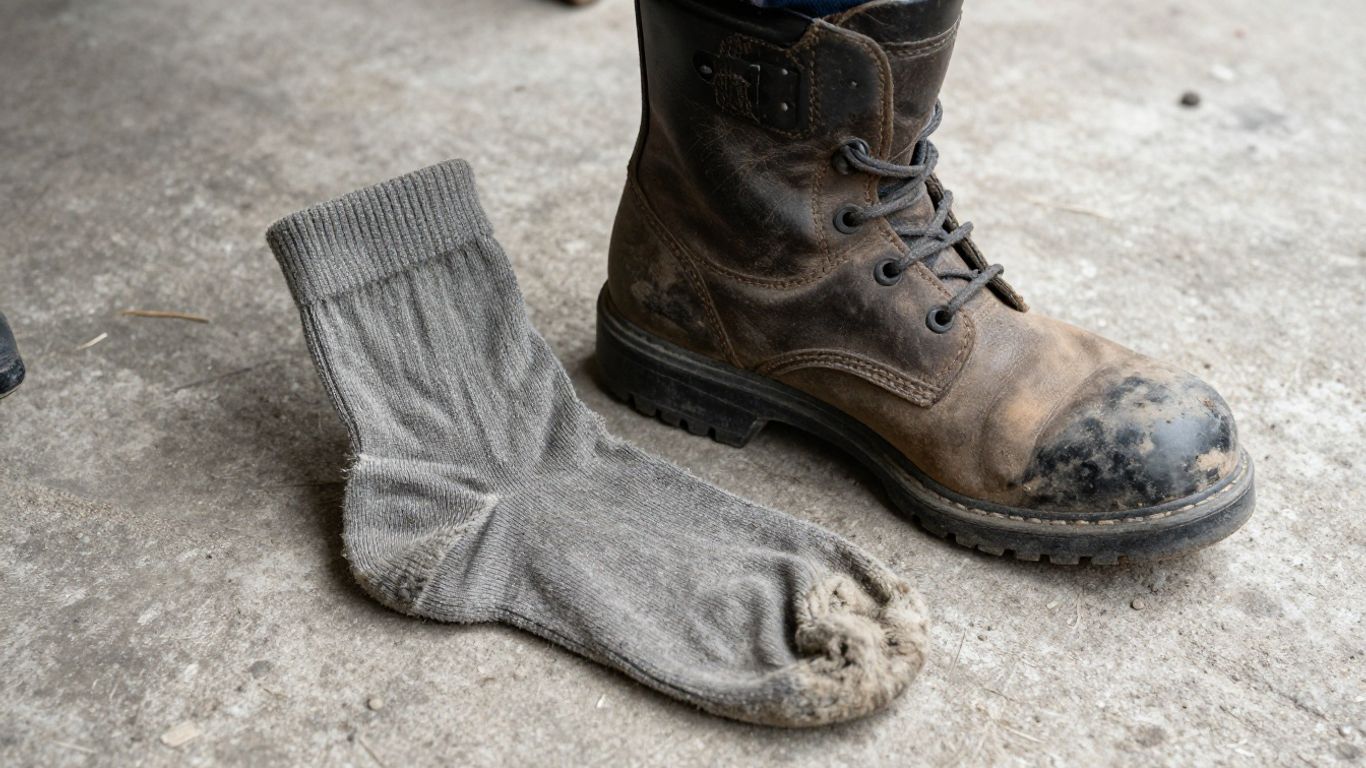
When selecting socks for a demanding industrial environment, there are several common traps you should avoid. First and foremost, steer completely clear of cheap, 100% cotton multi-packs. While they are inexpensive and easy to find, they quickly stretch out, retain sweat, and wear through at the big toe, leaving your foot vulnerable to painful rubbing against the interior of your boot.
Secondly, avoid socks that are overly thick throughout the entire foot if your work boots are already a snug fit. Forcing a massive, heavy-duty winter sock into a boot that is already tight will compress your toes, restrict blood circulation, and actually make your feet colder and more prone to cramping. Always balance the thickness of your socks with the physical volume of your boots.
To keep your feet in pristine condition, avoid the following common work sock mistakes:
- Wearing socks with thick, bulky toe seams that dig into your pinky toes inside tight steel-toe boxes.
- Choosing loose-fitting tube socks that lack a defined heel pocket, causing the fabric to bunch up.
- Relying on worn-out socks that have lost their elasticity and slide down your calf during your shift.
- Selecting pure synthetic socks without moisture-wicking technology, which trap heat and cause excessive sweating.
Avoiding these common pitfalls will save you from painful shifts and prevent you from throwing money away on socks that fail to support your body through long, grueling hours on the warehouse floor.
A Practical Sock Setup
Building a reliable sock rotation is the easiest way to ensure your feet stay healthy all year round. Rather than relying on a single type of sock for every weather condition, smart operators maintain a drawer stocked with a few seasonal variations. This allows you to match your socks to the temperature of the warehouse and the specific tasks of the day.
For hot summer months, opt for a medium-cushion, highly breathable synthetic or merino blend crew sock. In winter, or when assigned to cold storage and insulated environments, switch to heavy-duty, dense wool socks. You can also utilize thin liner socks under your thick winter options to create a layered system that traps warm air while aggressively moving sweat away from your skin.
Having a dependable rotation of high-quality socks takes the guesswork out of your daily routine. By preparing your gear in advance, you can focus entirely on your work, confident that your comfort is locked in from clock-in to clock-out. For tips on keeping your rotation fresh, read our guide on how to get rid of smelly socks.
Conclusion
Selecting the right socks for forklift operators is a critical but often overlooked aspect of warehouse safety and comfort. By prioritizing advanced moisture control, strategic cushioning on the heel and forefoot, and a snug, slip-resistant fit, you protect your body from the unique physical strains of heavy machinery operation. Transitioning away from cheap cotton and investing in a high-quality, seasonal rotation of merino wool, alpaca, or engineered synthetic socks will keep your feet dry, blister-free, and comfortable throughout the longest shifts, allowing you to focus on your work with confidence and ease.
FAQ
Why do my feet hurt so much after driving a forklift all day?
Despite being a seated role, forklift operating subjects your feet to constant micro-vibrations from the concrete floor and repetitive pressure from modulating stiff floor pedals. Without proper, targeted cushioning in the heel and forefoot, this static load strains your muscles and joints, causing deep aches by the end of your shift.
Why is cotton considered the wrong material for warehouse work socks?
Cotton fibers are highly absorbent and have no mechanism for moisture transport, meaning they soak up sweat and hold it directly against your skin. This damp, warm environment weakens your skin, makes you highly susceptible to blisters, ruins the thermal insulation of your boots, and promotes bacterial growth and odor.
How do moisture-wicking socks prevent blisters?
Moisture-wicking fabrics use specialized synthetic or natural fibers (like merino or alpaca wool) to pull sweat away from your skin and move it to the outer layer of the sock where it can evaporate. Keeping your skin dry is essential because dry feet generate far less friction against the interior structures of your work boots.
What are the benefits of wool socks in hot weather?
While it sounds counterintuitive, lightweight merino wool is an exceptional summer material because its natural fibers are highly breathable and manage moisture much better than synthetics. It actively regulates your temperature by helping sweat evaporate quickly, keeping your feet cool and dry even in hot warehouse bays.
Can I wear everyday athletic socks with my industrial work boots?
Athletic socks are typically made of cotton or thin polyester blends that lack the durability and structural support required for heavy leather or safety-toe boots. They tend to wear out very quickly at the heel and big toe, and they often slide down the calf due to weaker elastic bands.
How often should I replace my industrial work socks?