


Quick Answer
Ribbed cuffs help work socks stay up by using the knit structure of the fabric, not just a tight elastic band. A good ribbed cuff should hold the sock above your boot, move with your calf, and spread pressure instead of digging into one narrow line. If your socks slide down, bunch inside your boots, or leave deep marks after a shift, the cuff design, sock size, and fabric blend are all worth checking.
What Ribbed Cuffs Actually Do

The primary function of the ribbed cuff is to maintain height and stability. By creating structural folds within the fabric, the cuff can stretch as you move and return closer to its original shape afterward. This avoids the constant need to pull your gear up during the day.
Beyond just staying up, this feature is about managing how force is applied to your leg. Traditional elastic cuffs often squeeze a narrow strip of skin, which can cause discomfort or leave deep indentations after a long shift. Well-designed ribbed cuffs distribute tension over a wider surface area, so the hold feels more even instead of sharp.
The ribbed texture may also help the cuff feel less flat and clingy against the skin, which can make it more comfortable in warm conditions.
Why it Matters in Work Boots
Work boots are heavy, rigid, and often abrasive against the skin. When a sock slides down inside that heavy footwear, the resulting bunching can create hotspots that can lead to rubbing and irritation. A properly ribbed cuff keeps the material taut, helping protect you from the friction of the boot lining throughout your shift.
If your socks start sliding before lunch, the problem is not just annoying. The extra fabric can bunch at the heel, ankle, or boot collar and make the rest of the shift less comfortable.
For workers who spend most of the day in boots, not having to stop and pull socks back up is a small detail that can make the day feel easier.

When This Design Helps Most
Ribbed cuffs are particularly beneficial for workers who perform dynamic tasks. Whether you are crouching to weld pipes, walking on uneven ground, or alternating between standing and sitting, the cuff must adapt to your changing leg diameter. The ribbed knit can stretch and recover as your calf moves.
This style also excels in environments where you wear thick, non-breathable protective gear. The added texture of the ribbing helps to bridge the gap between your skin and the boot's collar, providing a softer barrier that is less likely to dig into the skin. It acts as a buffer zone that maintains its integrity even after repeated washings.
Another advantage occurs during high-output days. As you sweat, many socks lose their grip and start to sag into your boot. Because well-constructed ribbed socks are designed to maintain their shape, they remain firmly in place even when damp, providing a sense of security that you will not encounter slippage during your most intense physical exertions.
When Ribbed Cuffs Can Feel Too Tight
There are situations where the extreme grip of a heavy-duty ribbed sock might be overkill. If you are working in an environment that requires very lightweight footwear or if you have a medically diagnosed sensitivity to pressure on your calves, the added tension of a dense rib might feel restrictive to some individuals.
In these specific cases, a performance-blend sock with a flatter cuff profile may be preferable. While ribbed crews are standard for heavy boots, ultra-light options often use seamless or low-tension collars to accommodate different comfort needs or sensitive skin conditions. You should always prioritize your health above the aesthetic or structural norms.
Furthermore, if you find that a particular pair is still too tight even with the ribbing, it is possible you are wearing the wrong size. Overstretching any sock will make its cuff feel like a tourniquet. A larger size often resolves the issue by allowing the fabric to rest naturally against your leg instead of straining to cover it.
How to Tell If the Fit Is Wrong
A simple fit check: after wearing the socks for a few hours, look at the mark around your calf. A light, even imprint is normal for many socks. A deep, painful mark usually means the cuff tension is too high, the sock is too small, or the cuff is sitting at the wrong spot on your leg.
Matching Cuff Height to Your Boot
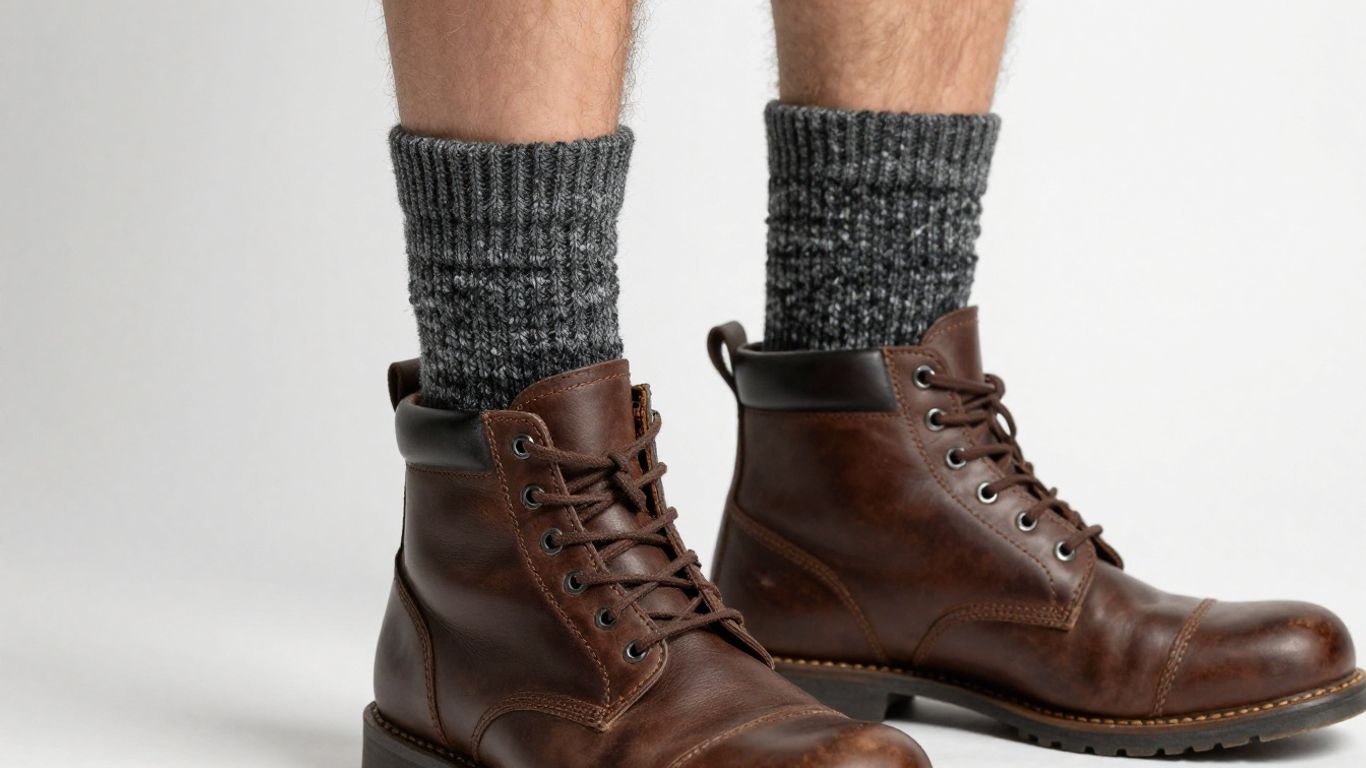
For work boots, the cuff should sit above the boot collar, not directly under it. If the top of the boot rubs against the cuff all day, even a good sock can start to feel uncomfortable. For taller boots, choose crew or boot-height socks that extend clearly past the boot opening.
How to Check Fit, Material, and Cuff Comfort
Proper fit is crucial for any work sock to perform as intended. When shopping, check the material composition for a blend of natural fibers like cotton or wool with a small percentage of elastane or polyamide. This durable mix helps reduce the chance of the cuff stretching out too quickly.
To help you determine which features matter most, consider the following checklist before your next purchase.
| What to Check | Good Sign | Warning Sign |
| Cuff tension | Holds the sock up without sharp pressure | Deep, painful marks or itching after wear |
| Sock height | Cuff sits above the boot collar | Boot collar rubs directly against the cuff |
| Fabric recovery | Sock returns to shape after stretching | Cuff stays loose or baggy after washing |
| Fiber blend | Wool or cotton blended with nylon/spandex | 100% soft cotton with poor stretch recovery |
| Reinforced zones | Heel and toe feel denser than the body | Thin heel/toe areas wear through quickly |
Following these guidelines ensures you are buying for your specific environment. A sock that works for a warehouse worker might be entirely inappropriate for someone working in an outdoor, refrigerated, or extremely wet environment. Always check the labels for specific fiber counts to gauge the expected lifespan of the cuff and heel.
Common Buying Mistakes to Avoid
A common error is assuming that all ribbed socks are thick and heavy. Some manufacturers create very thin, dress-style socks with ribbing that lacks the durability required for work boots. Failing to check the actual weight or intended application of the sock can lead to early failure of the fabric under the stress of a leather boot.
-
Buying strictly on price instead of fiber content.
-
Ignoring size charts which leads to overstretching.
-
Selecting socks that lack reinforced heels or toes.
-
Misunderstanding the cuff length for your specific boot height.
These mistakes typically lead to socks that wear out within a few months. When you neglect to consider the reinforcement of the stress points, the cuff might hold up perfectly while the heel disintegrates. It is the balance of all these features that dictates whether a pair of socks will serve you well for an entire season.
Choosing Your Pair
When evaluating potential options, think about the duration of your daily wear. If you work long, double shifts, look for socks that specifically mention high-retention fibers. These will maintain their tension throughout the entire day rather than losing their grip by the afternoon as cheaper alternatives often do.
Think about the height of your boot as well. You want the ribbed section to extend at least an inch above the top of your boot collar to prevent rubbing, sore spots, or irritation over time. If your socks are too short, the boot edges will rub against your bare leg, which can lead to rubbing, sore spots, or irritation over time.
Lastly, ensure the pair matches your environment. Whether you need a lighter sock for office work or a specialized industrial sock for heavy construction, the goal is always the same: comfort and stability. Pick a brand that offers a clear description of the materials used in the cuff, as this is the best indicator of long-term performance.
Top Recommendation
Hywell Merino Wool Work Socks. They are a good fit for workers who want a secure cuff without a harsh elastic-band feel. The 53% merino wool, 38% nylon, and 9% spandex blend gives the sock moisture management, durability, and flexible stretch, while the ribbed cuff helps the sock stay in place inside work boots.
They make the most sense for long shifts, steel toe boots, warehouse work, construction, landscaping, and other jobs where socks need to stay above the boot collar. They are not the best choice if you need a no-show or low-cut sock, or if you are very sensitive to any calf pressure.
Conclusion
Choosing the right work socks is about solving real problems: socks that slide down, cuffs that dig in, and fabric that bunches inside heavy boots. Ribbed cuffs address these issues by using the knit structure itself to create hold, rather than relying on a tight elastic band alone.
By checking cuff tension, sock height, fiber blend, and reinforced zones before you buy, you can find a pair that stays up through long shifts without leaving painful marks. A good cuff should be something you stop noticing. It stays in place, does not pinch, and lets the sock do its job inside the boot.
FAQ
Do ribbed cuffs leave marks on your legs?
They can leave a light, even imprint, especially after a long shift. That is different from a deep, painful, or itchy mark. If the line feels sharp or uncomfortable, the cuff may be too tight, the sock may be too small, or the cuff may be sitting at the wrong spot on your calf.
Are ribbed cuffs better for work boots?
Generally yes. Work boots are heavy and can cause loose socks to bunch and slide. A ribbed cuff helps the sock stay taut and in place, reducing the friction and heat that can contribute to irritation inside the boot.
Why do work sock cuffs lose their shape?
Elastic fibers fatigue after repeated stretching and washing. High dryer heat accelerates this. Air dry or use low heat to preserve elasticity, and replace socks when the cuff stays baggy after washing.
Can ribbed cuff socks be too tight?
Yes. If the cuff feels like a tourniquet, leaves deep marks, or causes itching, the sock may be too small or the cuff tension too high. Try a larger size or a flatter cuff profile.
Do ribbed cuffs replace compression socks?
No. Ribbed cuffs are designed to help the sock stay in place. They are not medical-grade compression. If you need compression for a health condition, follow professional medical advice instead of relying on regular work socks.
What material is best for ribbed cuff work socks?
A blend of natural fibers (merino wool or cotton) with synthetic stretch fibers (nylon, polyamide, or spandex). Pure cotton may not recover its shape well after stretching, and a sock with no elastane will likely sag.