


Eu costumava pensar que qualquer meia servia para o trabalho. Sabes, pegar o que estivesse limpo na gaveta e enfiar nas minhas botas de trabalho. Mas deixa-me dizer-te, essa abordagem deixava os meus pés bastante desconfortáveis no final do dia. Depois de muita tentativa e erro, aprendi que as meias certas para botas de trabalho femininas fazem uma enorme diferença. Não é só uma questão de conforto; é garantir que os meus pés aguentam tudo o que o trabalho lhes exige, dia após dia. Encontrar meias que realmente encaixem e desempenhem bem é uma mudança radical.
Pontos Principais
- Procura meias feitas de materiais como a lã Merino, que são ótimos para afastar a humidade e manter os pés numa temperatura adequada, ao contrário do algodão básico.
- A altura da meia é importante; escolhe meias que cheguem pelo menos ao topo das tuas botas de trabalho para evitar atrito e impedir a entrada de detritos.
- Boas meias de trabalho devem ter características como acolchoamento em áreas-chave e construção durável para aguentar longas horas em pé.
Porque é que os teus pés merecem melhor do que meias usadas
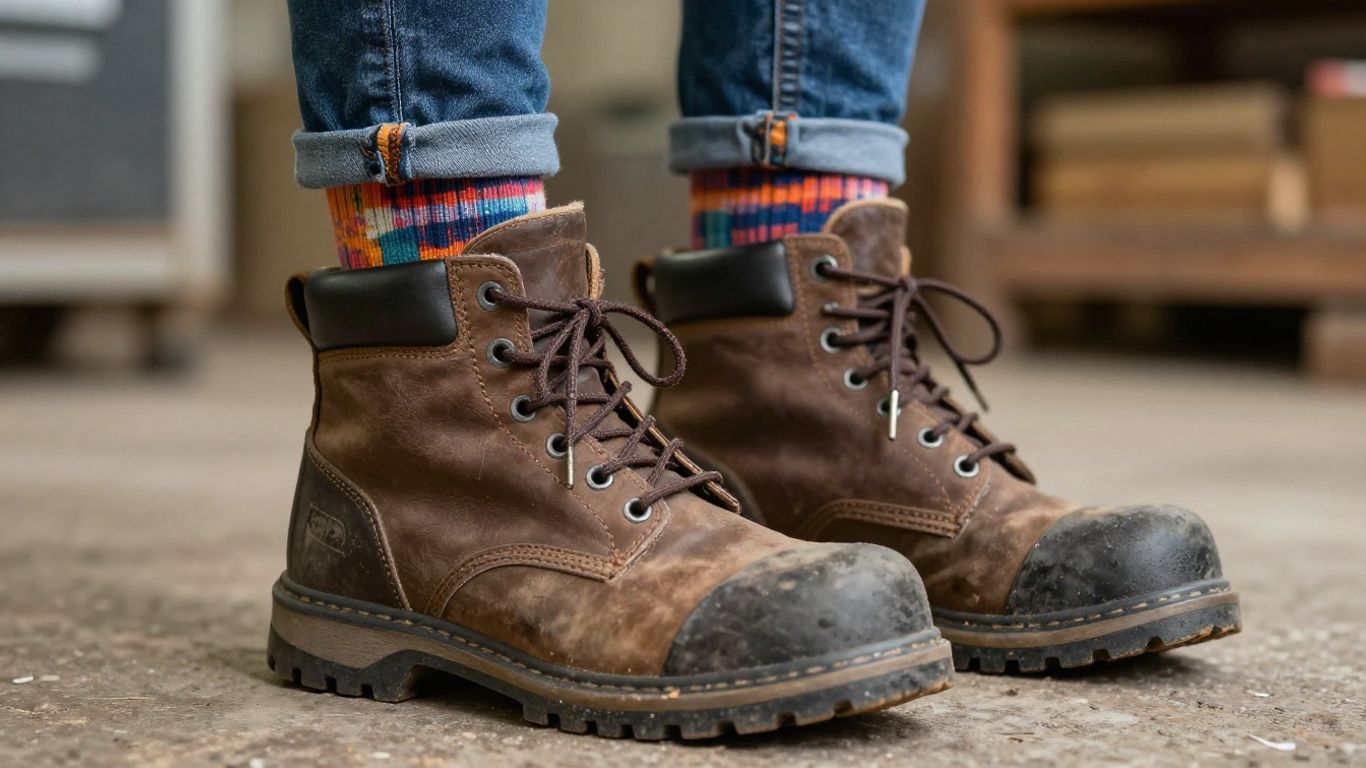
Os Heróis Desconhecidos do Teu Dia de Trabalho: Meias que Não Desistem
Sejamos honestos, quando foi a última vez que realmente pensaste nas tuas meias? Provavelmente nunca, certo? Elas estão simplesmente… lá. Enfiadas nas tuas botas, a cumprir o seu dever silencioso, muitas vezes suado. Mas estou aqui para te dizer que os teus pés estão a pedir por algo melhor. Eu costumava ser do tipo “qualquer meia limpa serve”. A minha gaveta de meias era um caos, um cemitério de pares desencontrados, calcanhares furados e aquela meia triste e solitária que perdeu o par no abismo da lavagem. As minhas botas de trabalho pareciam instrumentos de tortura, e eu pensava que isso fazia parte do trabalho. Mas afinal, os meus pés estavam a fazer uma revolta silenciosa, com bolhas e uma sensação geral de traição. Os teus pés carregam-te durante todo o dia e merecem mais do que meias usadas do reino das roupas esquecidas.
Pensa nisto: não usarias sapatos mal ajustados, então porque sujeitar os teus pés a meias que se amontoam, escorregam ou deixam a pele irritada ao almoço? É como tentar correr uma maratona de chinelos. Simplesmente não funciona. As meias certas podem fazer toda a diferença, transformando um dia exaustivo em algo… bem, menos exaustivo. São os heróis desconhecidos, os parceiros silenciosos do teu conforto no trabalho.
Para Além do Básico: O que Faz uma Meia de Trabalho Realmente Funcionar
Então, o que distingue uma boa meia de trabalho daquele tubo de tecido esticado e triste a que te agarravas? Tudo está nos detalhes, meus amigos. Estamos a falar de meias feitas para durar, não apenas para uma ida rápida ao supermercado.
Aqui está o que aprendi a procurar:
- Acolchoamento: Não só um pouco, mas acolchoamento estrategicamente colocado no calcanhar e nos dedos. É como uma almofada para os teus pés, a absorver o impacto e a evitar aqueles pontos de atrito temidos. Pensa nisso como absorção de choque para as tuas solas.
- Ajuste: Isto é fundamental. Uma meia que fica no lugar é uma mudança de jogo. Nada de parar para puxar as meias para cima, nem de dobras estranhas por baixo do calcanhar. Procura meias com um bom punho elástico que não aperte, mas que mantenha a posição. Algumas meias até têm suporte para o arco, que é como um abraço para os teus pés.
- Durabilidade: O trabalho é duro para tudo, incluindo as meias. Calcanhares e dedos reforçados são essenciais. Estas áreas sofrem mais desgaste, por isso um reforço extra significa que as tuas meias não vão furar mais rápido do que dizes “dia de pagamento”.
Eu costumava pensar que todas as meias eram criadas iguais, como pequenos tubos de tecido destinados ao mesmo destino. Mas depois de muitos dias com pés doridos e bolhas que podiam ganhar prémios, percebi que há toda uma ciência por trás das boas meias de trabalho. Não se trata só de manter os pés cobertos; é sobre apoiá-los, protegê-los e garantir que aguentam tudo o que o trabalho lhes exige.
Quando procuras meias que aguentem o ritmo, considera materiais como a lã Merino pela sua capacidade natural de regular a temperatura e afastar a humidade. É muito diferente das meias básicas de algodão que retêm o suor como uma criança carente. Estas meias especializadas foram feitas para manter os teus pés secos e confortáveis, independentemente das condições.
Navegar pelo Corredor das Meias como um Profissional

A Altura Importa: Desde Meias Curtas até às Altas até ao Joelho
Ok, vamos falar da altura das meias. Isto não é só uma questão de moda, pessoal. Quando estás a martelar ou a lidar com canos, a altura errada da meia pode causar atrito sério. Aprendi isso da pior maneira, acabando com uma bolha que parecia um pequeno gremlin zangado a viver na minha bota. Para a maioria das botas de trabalho, queres algo que chegue pelo menos até ao meio da canela. Isto cria uma boa zona de proteção entre a bota e a pele. Pensa nisso como um campo de força protetor para as tuas canelas. Meias até ao tornozelo? A menos que estejas só a ir buscar o correio, deixa essas para os ténis do ginásio. São basicamente um convite para a bota mastigar o tornozelo. Meias acima da canela são ótimas também, especialmente se passas muito tempo a dobrar-te ou a ajoelhar-te. Ficam no lugar e oferecem essa camada extra de segurança. Sério, não subestimes o poder de uma boa altura de meia.
Mundo dos Materiais: Porque a Lã é a Tua Nova Melhor Amiga (Desculpa, Algodão)
Eu costumava ser do tipo que só usava algodão. “É macio!” exclamava, ignorando completamente o pântano que os meus pés se estavam a tornar. Depois descobri a lã. Especificamente, a lã Merino. Isto é como magia para os teus pés. Afasta a humidade como ninguém, o que significa que não há mais pés suados e fedorentos ao almoço. Além disso, mantém-te quente quando está frio e surpreendentemente fresco quando está calor. O algodão, por outro lado, só retém a humidade como se fosse moda. Ficas molhado, com bolhas e, definitivamente, com aquele cheiro a “cão molhado”. Descobri que meias com uma boa percentagem de lã Merino são uma revolução. Podem custar um pouco mais à partida, mas acredita, os teus pés vão agradecer. São também muito mais duráveis do que as meias de algodão comuns, aguentando o desgaste diário sem furar ao fim de uma semana. Aqui vai um resumo rápido:
- Algodão: Absorve humidade, fica molhado, cheira mal. Evita para trabalho sério.
- Sintéticos: Podem ser bons, mas por vezes não respiram tão bem como a lã.
- Lã (especialmente Merino): Afasta a humidade, regula a temperatura, resiste a odores e é super confortável.
Quando escolhes meias, pensa no que os teus pés enfrentam durante o dia. Ficam encharcados? Estão apertados nas botas? Caminhas muitos quilómetros ou estás parado? As respostas a estas perguntas vão indicar-te o material e a espessura certos. Não é só uma questão de conforto; é prevenir problemas antes que comecem.
Escolher as meias certas pode parecer um quebra-cabeças, mas não tem de ser! Quer precises de meias resistentes para um longo dia de trabalho ou de meias confortáveis para relaxar, saber o que procurar faz toda a diferença. Não te percas mais no corredor das meias; encontra o teu par perfeito com facilidade. Visita o nosso site hoje para explorar a nossa coleção e descobrir meias feitas para cada aventura!
Então, Qual é a Conclusão?
Ok, já falámos muito sobre meias. Tipo, mesmo muito. Quem diria que havia tanto para considerar quando se trata do que colocas nos pés antes de calçar aquelas botas de trabalho fiáveis? Tenho quase a certeza que as minhas meias antigas foram para o lixo na minha cabeça. Afinal, escolher a meia certa não é só evitar bolhas (embora isso seja importante). É encontrar a combinação perfeita de acolchoamento, durabilidade e respirabilidade que te faz esquecer que as estás a usar. Porque, honestamente, a última coisa que precisamos é de ser distraídos pelos nossos pés quando estamos a tentar trabalhar. Agora vai e escolhe as meias sabiamente, meus amigos!